
Introduction: Governing by Surprise
What happens when a country is run like a nightly inspection tour?
In Tunisia, President Kais Saied has carved out a unique—and deeply personal—approach to leadership. He appears without notice at ministry offices, warehouses, public markets, or illegal dumping sites, often late at night. These surprise visits are broadcast through tightly controlled media coverage, with the president fully aware of the camera, microphone, and framing.
He confronts dysfunction head-on. He scolds ministers, humiliates civil servants, and speaks directly to the people, unfiltered. On the surface, it looks like moral clarity in action—an uncorrupted president holding a broken system accountable.
But dig deeper, and you find something else:
A model of leadership that is highly reactive, deeply centralized, and dangerously unsustainable.
This isn’t just about style. It’s about how a state functions—or collapses—when leadership is built on distrust, isolation, and fear.
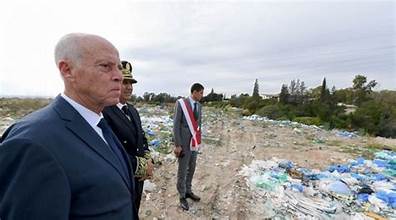
What Looks Like Strength May Be Institutional Weakness
At first glance, Saied’s approach appeals to frustrated citizens. It taps into real anger about corruption, inefficiency, and public sector failure. People want accountability—and here’s a president willing to confront the rot directly.
But the method reveals its own dysfunction:
- The president has to act as inspector-in-chief.
- Institutions are clearly not trusted to self-regulate.
- Ministers and senior officials are surprised, exposed, and often discarded.
If the top of the system doesn’t trust anyone below, then governance is no longer about leadership—it’s about surveillance.
Fear-Based Culture: Compliance Over Competence
When the risk of public shaming is high, people adapt—but not in healthy ways. Under this model:
- Civil servants hide problems rather than solve them.
- Ministers say what the president wants to hear, not what he needs to know.
- Innovation and initiative are replaced with silence and self-preservation.
This is leadership by fear. And fear is a terrible long-term management tool. It creates obedience, not performance.
The Cult of the Lone Watchman
These visits have become a ritual: the president, the camera, the microphone, the reprimand. They suggest that only one person can be trusted to uphold the state. Everyone else is suspect. Even those hand-picked by the president are later discarded or scolded in public.
What emerges is not a system—it’s a cult of oversight, centered on the idea that only the leader sees clearly.
But a one-man model of governance is brittle. It does not scale. It cannot delegate. And it leaves the country vulnerable to burnout, blind spots, and breakdown.
Warning Signs of an Unsustainable Leadership Model
| Symptom | Consequence |
|---|---|
| Constant surprise visits | Breakdown of trust in the institutional chain of command |
| Public shaming of officials | Culture of fear, avoidance, and passive resistance |
| Media-managed moral performances | Erosion of authenticity, increase in spectacle over substance |
| Zero delegation of responsibility | Fragile governance model overly dependent on one individual |
| No strategic follow-through | Focus on visible reaction, not durable reform |
From Action to Optics: When Governance Becomes Theater
Perhaps the most dangerous shift is this:
These visits are no longer tools of reform. They’ve become performative acts of leadership.
They offer no clear roadmap for institutional reform, no systemic solutions, no delegation of authority. Instead, they offer visual proof that the president is vigilant, and that the system cannot be trusted without him.
This isn’t leadership by vision—it’s leadership by visibility.
What True Leadership Would Look Like Instead
A sustainable leadership model would:
- Build systems that catch problems before the president has to
- Empower teams to act with integrity, not fear
- Define clear KPIs, not rely on spontaneous interventions
- Develop a culture of trust, coaching, and learning
Real leadership is judged not by how visible the president is in solving problems,
but by how little intervention is needed once institutions function on their own.
Conclusion: A Fragile Future for a Hyper-Personalized Presidency
Kais Saied’s nightly inspection model reflects more than frustration. It reflects deep isolation at the top of Tunisia’s government.
It reveals a president who trusts no one, leads through shock and fear, and has normalized personal confrontation over institutional capacity.
This is a model that may feel strong in the moment—but over time, it hollows out the state.
Leadership that cannot delegate, cannot last.
Reflection Questions for Leaders and Citizens
- Are we building systems that work—or just reacting when they fail?
- Are leaders trusted enough to lead—or simply feared into obedience?
- Is our governance model sustainable—or built entirely on one person’s presence?

 Leadership Challenges of the 21st Century