How I Work
Most leadership challenges are not random. They follow patterns.
I use a structured approach to diagnose situations, identify where to act, and move organizations forward.
Most leaders act before diagnosing. This is where problems begin.
A situation that is not clearly understood cannot be solved effectively.
Most leaders do not lack intelligence or experience.
They lack clarity on what they are dealing with and how to act.
The goal of these tools is simple:
- make the situation visible
- make the action clearer
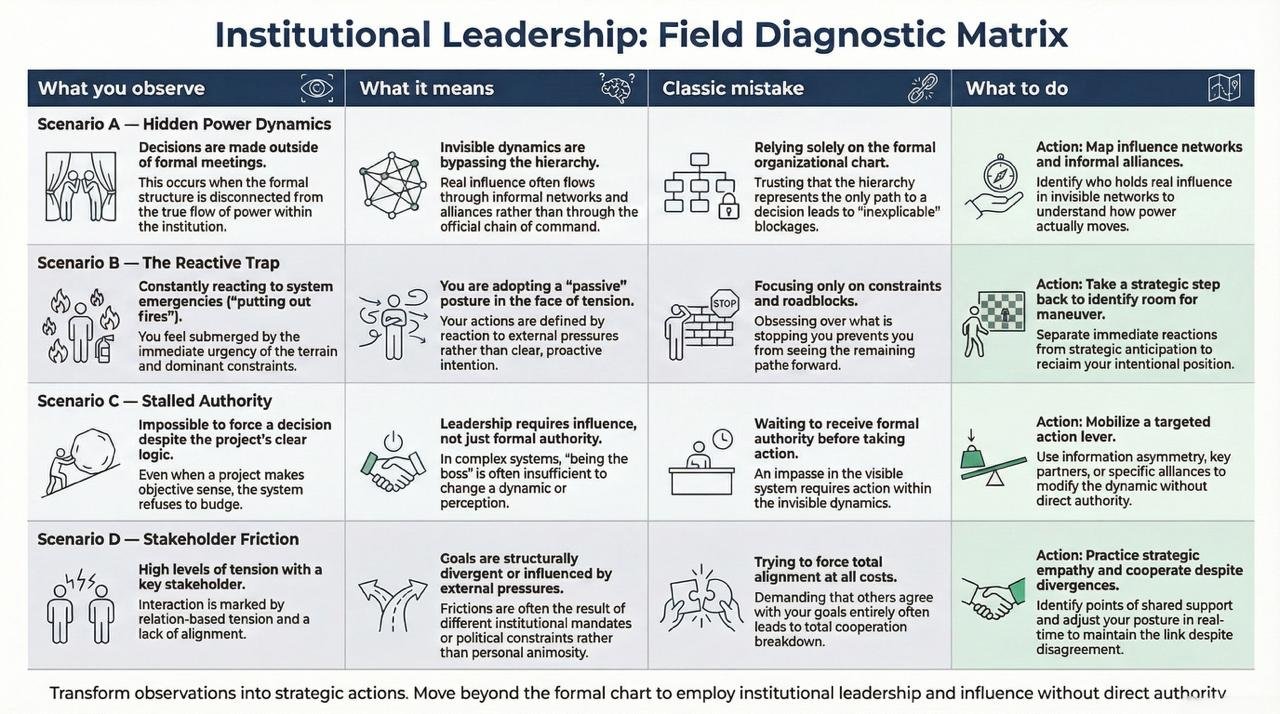
1. Diagnose the Situation
Most leadership problems look similar on the surface, but they are not the same underneath.
A delay in execution can come from:
- unclear roles (systemic)
- lack of alignment (collaboration)
- unresolved tension (conflict)
- hidden interests (political)
Treating them the same leads to the wrong decisions.
Leaders often act too quickly, without identifying the nature of the situation.
This is where mistakes begin.
This framework helps answer a simple but critical question:
What kind of situation am I really dealing with?
2. Decide Where to Act
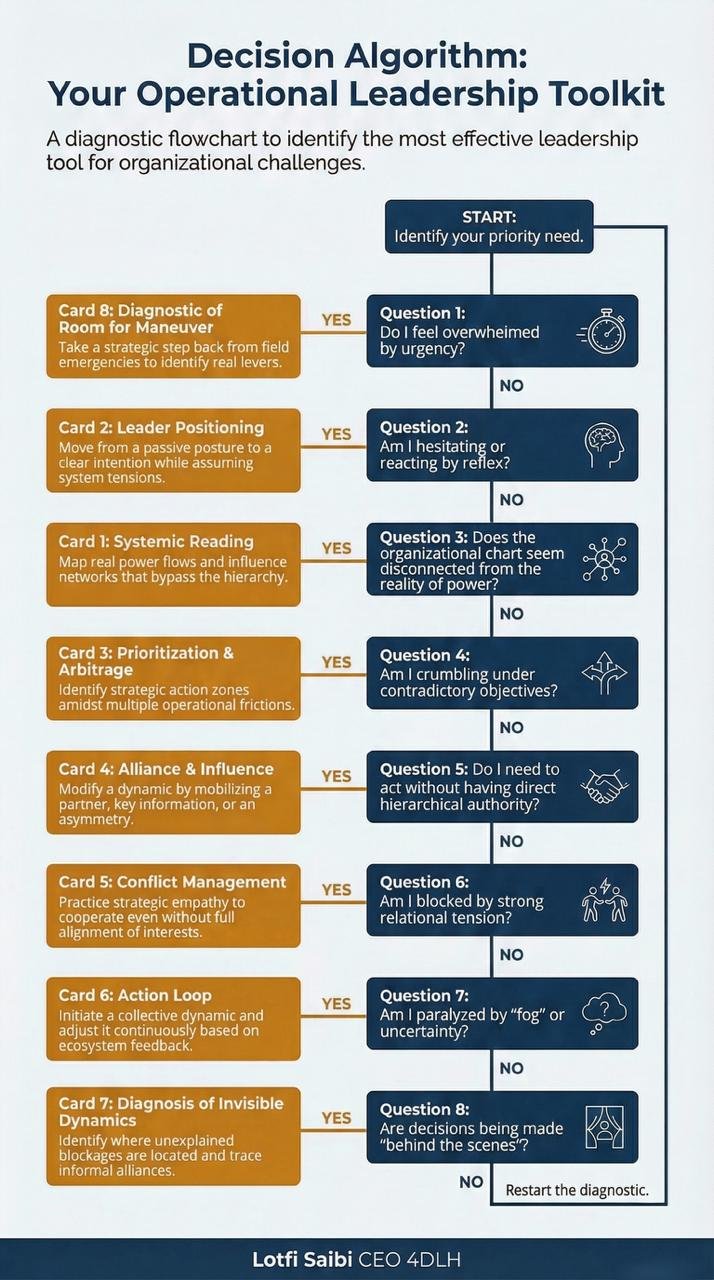
Once a situation is identified, the next challenge is deciding how to act.
Most leaders react to urgency instead of understanding where to intervene.
This leads to:
- acting on symptoms instead of causes
- escalating issues instead of resolving them
- wasting time on the wrong actions
Not all problems require the same response.
Some require:
- clarification
- alignment
- confrontation
- influence
- structural change
This framework helps leaders move from:
reaction to intentional action
3. From Action to Strategy
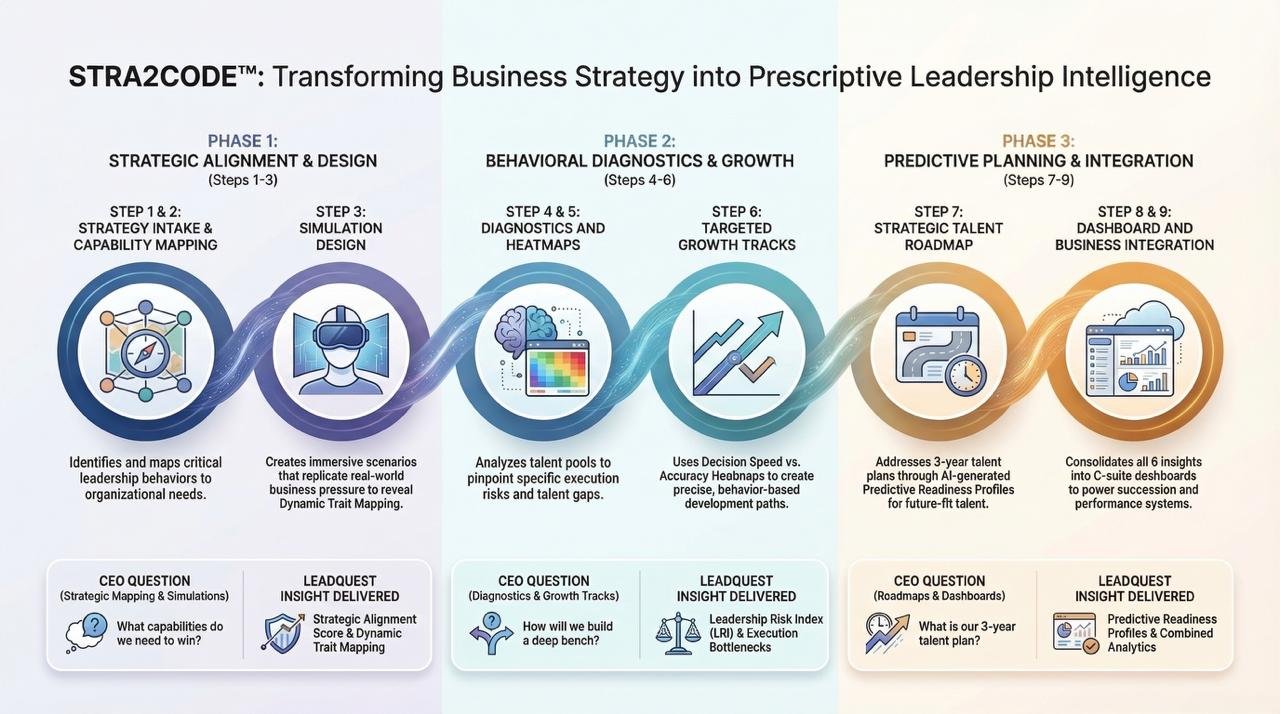
At a higher level, leadership is not just about solving isolated problems.
It is about connecting:
- diagnosis
- decision-making
- and long-term direction
This model structures how organizations:
- align their strategy
- understand their reality
- and act with consistency over time
- react instead of anticipate
- repeat the same problems
- struggle to scale decisions
This model provides a way to move from:
situational reaction to strategic coherence
This approach is applied in my work with leadership teams and organizations facing complex challenges.
Work With Me