Tag Archives: communication

Une Nation Traumatisée

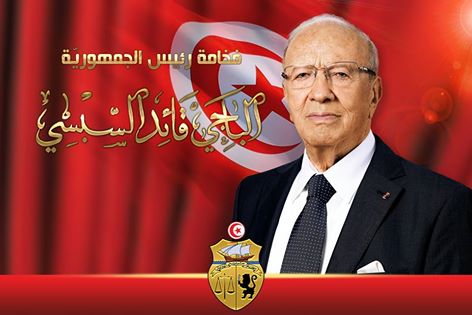
«La Tunisie n’est pas en sécurité”; “la prochaine attaque terroriste achèvera l’état Tunisien”: C’étaient les déclarations du président Béji Caïd Essebsi tout en annonçant l’état d’urgence. “Le président a délivré ces messages en guise de thérapie de choc pour la nation” ceci était l’explication donnée par Moez Sinaoui, le conseiller présidentiel en communication.

Mais est-ce que notre président, et son staff de communication, avaient bien calculé les effets psychologiques de ces déclarations sur chaque citoyen tunisien qui les a entendu? Je pose cette question parce que ce qui a été dit, compte tenu du message et de son dispensateur, était très dangereux et pourrait affecter le quotidien de tout un peuple, en ayant des réactions opposées à celles prévues. Ce discours a été marqué par deux caractéristiques qu’on ne peut ignorer: une communication appuyée sur les directives et des propos alarmistes, conduisant à des changements de comportement involontaires. Mon attention porte, pour le moment, sur la deuxième caractéristique, car la première nécessitera beaucoup plus d’encre.

BCE

Ce n’est un secret pour personne: la plus grande préoccupation de tout tunisien, quelle que soient sa classe sociale ou son orientation politique, n’est autre que la menace, chacun d’entre nous est effrayé à l’idée de se réveiller sur les nouvelles d’une autre attaque qui fera couler plus de sang. Nous passons notre temps à nous poser cette question dans l’espoir d’une réponse: Comment un pays comme la Tunisie, à l’histoire si pacifique, qui n’a jamais eu affaire à la violence et qui est si léthargique face au changement, pourra affronter  ce que nous avons toujours pensé être un phénomène étranger lié au pétrole et à l’extrémisme religieux.

En tant qu’êtres humains, nous développons des instincts  survie et des mécanismes de défense pour nous protéger de tout ce qui menace nos vies ou notre façon de vivre.

Après le 9/11, des chercheurs de Harvard et d’Oxford, ont inventé le terme «Saillance de Mortalité» comme étant la façon avec laquelle les gens s’adaptent aux menaces terroristes et à la surexposition à des pensées ou des images liées à la mort. Il a été démontré que les images relayées par les médias lors de  la couverture des actes  terroristes, produisent un effet de saillance de mortalité.

Dans les deux dernières années, les attaques terroristes en Tunisie se sont intensifiées remarquablement, entrainant ainsi une augmentation accrue du nombre de victimes, et la potentialisation de l’exposition quotidienne aux images de violence, aux  menaces, et maintenant à l’état d’urgence. La plupart des Tunisiens ont réagi comme toutes les nations dont la vie et le modèle de société sont menacés, avec  de la colère, de l’incertitude et un sentiment d’impuissance, qui viennent s’ajouter à une montée du patriotisme et d’un appel à l’unité nationale. Cela est tout ce qu’il y a de plus naturel, car sous l’effet de saillance de mortalité, on est plus fiers et on s’identifie plus à son pays, à sa religion, à son  sexe, à sa race, etc……

Ceci n’empêche que la saillance de mortalité peut conduire à une potentialisation du soutien à l’extrémisme quand celui-ci est lié à l’identité du groupe. Les exemples récents de jeunes tunisiens exprimant leur sympathie et leur soutien aux auteurs des attentats de Sousse ou du Bardo, sont le résultat de la saillance  de mortalité, en plus de la surexposition aux nouvelles et images de terrorisme dans les médias. Les recherches ont démontré que la saillance  de mortalité induit des réactions brutales envers ceux qui sont perçus comme enfreindre les règles ou ceux qui ne se conforment pas aux standards d’une communauté donnée.

Ainsi, la saillance de mortalité créé par la couverture médiatique du terrorisme peut potentialiser la sympathie et le soutien pour le gouvernement, tout en haussant le degré d’hostilité envers les ennemis supposés du pays; mais en même temps elle peut faire proliférer, chez certains, la sympathie  “cachée” envers les terroristes, en leur fournissant de futures recrues faciles.

fears

Bien que les populations aient tendance à bien gérer les menaces terroristes en cours, la couverture médiatique est souvent un facteur de déstabilisation qui s’ajoute à la sauce. L’attention des médias amplifie à la fois la fréquence et la sévérité des attaques terroristes, laissant planer une croyance que la situation est pire que ce qu’elle est réellement: c’est exactement ce que nous avons vécu depuis les attentats du Bardo et de Sousse.

La couverture médiatique intense, et parfois irresponsable,  peut avoir une certaine incidence préjudiciable sur des adultes ou des enfants fragiles, qui sont exposés à des problèmes psychologiques graves suite à une longue exposition aux images de terreurs. Les enfants ont souvent du mal à dormir, souffrent de cauchemars, de problèmes d’anxiété ou de dépression. Les adultes souffrent de stress au travail et dans leurs relations quotidiennes, conduisant à une baisse de productivité et une hostilité accrue.

Aujourd’hui en Tunisie, une formation en communication,  en journalisme responsable, et en gestion de crise pour les responsables politiques et tous ceux qui s’invitent chez nous, dans nos salons et nos voitures; est devenue  une nécessité et non un luxe.

TUNISIA – A COUNTRY PSYCHOLOGICALLY TRAUMATIZED

“Tunisia is not safe” and “the next terrorist attack and our country will be finished”. These were statements by President Beji Caid Essebsi while announcing a state of emergency. The president was sending a “shock therapy” message to the nation was the explanation given by Moez Sinaoui, his top communications adviser.

What psychological effects did these statements by the commander and chief have on us Tunisian citizens? I ask this question because what was said , considering the message and the deliverer,  was very dangerous not only on the psyche of a fragile nation but also on its ability to defend itself.

In those spoken words were two strong messages that cannot be disregarded: a dictating style of communications long thought gone, and fear mongering. My focus for the moment is the latter, as the first one requires much more ink and time.

Ask any Tunisian today about his biggest concern and you will find that it is fear, and more specifically of terrorism. Tunisians up and down the socioeconomic ladder and of all political affiliations are exposed every awaken moment to news of terrorism threats, more attacks, and death related to terrorism. How should a nation like Tunisia, passive in its ways, unprepared for violence, and lethargic in implementing change, deal with what always was thought a foreign phenomenon related to oil, religion, and country grabbing.

isis

Exposure to violence, terrorism threats, insecurity have major negative psychological repercussions on a nation discovering what it means to be unsafe for the first time.

Are we aware of short and long terms effects of such media exposure? Do our journalists understand at which point their reports contribute to the mental health of a nation? Are media aware of the psychological dangers and social and class divisions as a result of uneven reports?

Researchers at Harvard and Oxford Universities, dealing with psychological syndromes post 9/11 and 7/7 terrorist attacks coined the term “mortality Salience” as the way with which people adapt to terrorist threats and overexposure to death-related thoughts or imagery. The images of death, dying and killing, which are inherent in most media coverage of terrorism, produce a mortality salience effect.

In the last two years, terrorist attacks in Tunisia have increased, and with them the number of casualties and daily exposure to violence, violence imagery, threats, and now state of emergencies. Most Tunisians have reacted like any others whose lives and model of society is being threatened, with anger, uncertainty, and helplessness, but also an increase in nationalism, patriotism and a call for unity. This is natural as Mortality salience can lead to an increase in identification with and pride in one’s country, religion, gender, race, etc.

Remarkably, mortality salience can lead to an increase in support for extremism when it is linked to group identity. Two recent examples of young Tunisians expressing sympathy and support for the Sousse or Bardo killers are the result of mortality salience and over exposure to terrorism in media. Also, individuals experience exaggerated tendencies to stereotype and reject those who are different from themselves. Research has demonstrated that mortality salience produces especially harsh reactions to those who are seen to be breaking the rules.

Thus, the mortality salience created by the coverage of terrorism can be expected to lead to an increase in sympathy and support for the government, thus, an increased hostility toward the country’s perceived enemies; while at the same time to augmented “hidden” sympathy to the terrorists themselves, providing them with easy future recruits.

While populations tend to cope fairly well with ongoing terrorist threats, media coverage often adds a destabilizing factor to the mix. Media attention certainly fosters a widespread belief that terrorist attacks are both more common and more dangerous than is actually the case, a case we have experienced after the Bardo and Sousse attacks.

Intense, and sometimes irresponsible, media coverage by itself can have some damaging impact with some adults and children appearing to suffer serious psychological problems as a result of long exposure to media coverage of terrorist attacks. Children often had trouble sleeping, suffer from nightmares, anxiety problems or depression. Adults can become stressed at work and in daily relationships, leading to decreased productivity at work, and increased hostility.

I am more than certain that communications training, responsible journalism, empathy and crisis management is a necessity not a luxury today in Tunisia and should be considered in any public or private institution’s strategy in dealing with this new chapter that is sadly not going away any time soon.

BCE – Discours d’investiture – a-t-il marqué?

Certains diront, et ils auraient probablement raison, que le discours d’investiture de BCE était loin d’être  le meilleur discours qu’il ait pu donner.

BCE

En essayant d’analyser la dernière allocution de BCE, et en partant des principes de base de rédaction de discours et de communication politiques  tout en gardant à l’esprit le contexte d’un tel événement, nous pourrons relever les points suivants:

  1. En termes decontenu: BCE a commencé son allocution avec des messages forts, marqués de clarté et de simplicité. Ceci est une bonne leçon pour les rédacteurs de discours amateurs qui tentent d’en dire trop et finissent par ne rien dire. Cependant, BCE manquait de maîtrise, il semblait lutter avec le texte préparé, et cela a bien amoché la cohérence du message véhiculé. Il parait  bien évident que Mr le Président ne s’est pas assez imprégné de son discours, ou alors il avait très peu de temps pour répéter ce qui était destiné être son discours le plus célèbre.
  2. BCE a prononcé un discours équilibré, en prenant le soin d’insister sur des points clés. Il s’est adressé aussi bien à ses amis qu’à ses ennemis. Il a excellé en remerciant les femmes dans leur rôle actif. Il a fait honneur à son statut en remerciant ceux qui ont voté pour son adversaire, en reconnaissant ceux dont les vies ont été prises trop tôt par ceux qui haïssaient la paix et en offrant un rameau d’olivier à ceux dont les idéologies pourrait être différentes de la sienne tout en assurant que leur soutien est indispensable pour l’avancement du pays. Il a assuré à ses partisans ainsi qu’à ses détracteurs, qu’il serait le président de tous les Tunisiens, et que l’unité nationale serait la carte gagnante pour mener la Tunisie à bon port.
  3. Citations percutantes et mémorables: C’est une marque de fabrique des discours de BCE qui a bien fait défaut cette fois. Dans son discours, BCE n’a pas mis l’accent sur les challenges qui nous guettent ni sur le manque de confiance qui sape le moral des Tunisiens. Il n’a fait aucune référence et n’a donné aucune assurance aux jeunes désespérés, ni à ceux qui peinent sous le seuil de la pauvreté, et qui sont devenus des pions politiques. En somme, ce speech manquait de “coup de poing” et d’appel à l’action, il manquait de l’esprit du “ask not what your country can do for you…” ou, “I have a dream”, ou encore “yes we can”. Je cherchais en vain un leader qui donnerait de la force à une époque troublée et de la sagesse à un avenir inconnu. Au lieu de cela, je n’ai entendu que des mots et des pensées non coordonnés, émanant d’un homme âgé peinant à garder sa lucidité, ce qui m’a remis à l’esprit les doutes émis pendant la campagne concernant sa fragilité physique. Néanmoins, j’étais rassuré par ses bonnes intentions et son désir du mieux de ce qu’il peut.
  4. Elaborer les contrastes et transporter les auditeurs: c’est là où BCE n’a pas assuré. Il a omis de nous peindre une image du pays que nous avons tous souhaité avoir, la Tunisie unie, pacifique harmonieuse, et autonome, où les rêves peuvent devenir réalité pour tous ses citoyens, contrairement à celle où nous avions vécu pendant les 4 dernières années , où beaucoup de ces rêves semblaient se dissiper et se faner. Le discours du président n’a pas réussi à nous inspirer ni à nous motiver pour que chacun de son côté fasse de son mieux pour transformer ce pays. Durant la campagne, BCE n’a cessé d’emprunter l’image de Bourguiba, mais à la 1ère épreuve à “statut” égal, Béji a montré qu’il lui reste du chemin pour devenir un Bourguiba.

Sur la prestation et la performance technique, je crois que BCE a échoué dans cet événement historique mémorable. Il était très mal à l’aise avec la “mise en scène”, ce serait peut-être à cause de la maladie, du froid, ou encore d’un long parcours de campagne électorale épuisante, mais le fait est que tout ce qui a caractérisé les discours de BCE au cours des 2 dernières années, manquait à sa 1ère allocution en tant que président. Nous sommes restés sur notre faim, car nous attendions le Béji éloquent, fort, spontané, charismatique, aux yeux perçants, le maître de la parole tranchante qui vous fait languir pour ses discours interminables Il est clair que BCE se sent plus dans son élément lorsqu’il est en  free-lance, c’est là qu’il peut parfumer sa prestation avec des anecdotes et des versets coraniques, quoique souvent hors contexte.

https://lotfisaibi.wordpress.com/2015/01/01/beji-caid-essebsi-speech-writing-and-communication-lessons/

Beji Caid Essebsi – speech writing and communication lessons

Some will argue that BCE’s speech in front of the ARP to be officially named as president of Tunisia was not his most electric speech, that it was a far cry from what was expected, or that it failed to deliver on unreasonably high expectations, and they might be correct.

If we want to apply basic speech writing and political messaging principles to BCE’s speech and also keeping in mind the context of such an event, we come up with the following points:

  1. In terms of the speech contents, he started strong with a simple yet clear speech outline. This is a good lesson for amateur speech writers who try to say too much and end up saying nothing. However, BCE did not appear strong and in control. He appeared to be struggling with the prepared text, and this took away from the coherence of the message being conveyed. It is quite evident that he either did not prepare the speech, or that he had spent very little time rehearsing what might possibly be his most famous speech.
  2. He delivered a balanced speech by reminding us of key points. In this he addressed friend and foe. He excelled by thanking the women in their active role, was equal to the task in thanking those who voted for his opponent, acknowledging those whose lives were taken too soon by peace haters and by offering an olive branch to those whose ideologies might be different than his, but whose support is needed to move this country forward. He assured his fans and detractors that he would be everyone’s president and that national unity is needed to complete this journey.
  3. Impactful and memorable lines – usually a specialty of his, was missing in this speech. The speech lacked emphasis on the realities facing us, on the sagging morale and lack of confidence, and made no reference and gave no assurances to the desperately young and the very poor who have become political pawns. It lacked the knockout punch and call to action, like “ask not what your country can do for you…” or, “I have a dream”, or “yes we can”. I was looking for a leader that would provide strength in a troubled time and wisdom in unchartered future. Instead, what I heard were words, and uncoordinated thoughts of an elderly man struggling to speak lucidly. I was left with more consternation for his physical abilities, but somewhat assured by his good intentions and the desire to do the right thing.
  4. Where this speech failed in seizing an opportunity is by amplifying words by drawing contrasts between the past and the present. A good example would be MLK’s “I have a dream speech”. Interestingly, a tactic that came naturally to BCE during his campaign tour.

On the delivery and technical performance I believe that BCE failed in this momentous historical event. He was very much uncomfortable with the setting and perhaps for good reason: illness, cold weather, old age, and long exhausting schedule. Everything we have grown to expect from him in his speeches during the last 2 years was missing and that is because he is most comfortable when he free-lances by mixing a few anecdotes and Koranic verses, often out of context. He lacked his eloquence, strength, spontaneity, charisma, cadence, piercing eyes, and sharpness that made you wish for endless speeches. In this he convinced me that he is no Habib Bourguiba.

Purpose before Self-Your mission as a leader

In an era when many business leaders seek celebrity at the expense of their companies, others are quietly focused on something else entirely: the business.

What they care most about is carrying out the mission of the business, delivering the promised results, and building an organization they can be proud of.

They have a sense of purpose that goes beyond their own personal desire for extraordinary wealth, status, self-aggrandizement, or power. They put a broader purpose before interests that benefit only them.

Magnetic Leadership

Look around your organization and you’ll likely see leaders who are always thinking of what’s best for them or what will make them look good.

Then there are others who are driven to create something meaningful and enduring. Their purpose might be to make the organization the most respected in its industry, or to develop the best workforce in the world. One CEO I know has made it his purpose to recast his company as an innovation-driven organization.

These are the leaders people typically gravitate toward. The ones we trust, and who we want to be more like — not because of how much money they make, how much power they have, or how well-known they are, but because of who they really are, their inner substance.

Given the public transparency of the 21st century, leaders who put purpose before self are the ones to follow — and to emulate.

Actions Speak Louder Than Words

Some leaders make impassioned speeches about their glorious mission or lofty goals, but their actions reveal their true motivations. They want their own fame, power, and fortune more than anything.

Are you the type who says the right things, or the type who does the right things? Is your self-interest served by meeting a higher purpose?

Put yourself to the test by being intellectually honest in answering the following questions:

1. Are you willing to give up some of your turf for a broader purpose?

In 2005, a $20 billion company underwent a major reorganization, and one of the senior executives approached the CEO to tell him a portion of the executive’s new job really should belong to someone else.

What was he thinking? He was in a horse race to succeed the CEO and already had the smallest scope of all his peers and fellow contenders for the top job. Under those circumstances, many leaders would try to expand their span of control. But he believed the organization would work better if certain areas went to someone else.

This leader was not naïve or unambitious. It’s just that he truly wanted the business to succeed. Of course he hoped that his thinking would be recognized and appreciated. When his boss and the board get close to the succession decision, no doubt they’ll remember that this person revealed he’s not a greedy empire builder.

Caring about the good of the organization can mean ceding a portion of your span of control, voluntarily agreeing to cut back on projects in order to meet a budget goal, or sharing part of your leadership responsibilities with an up-and-coming leader who needs a development opportunity.

It might also mean giving up valued team members who would better serve the organization in a different capacity. In today’s global organization, letting go of good people is almost an imperative.

2. Do you place a high value on relationships?

Leaders who lead with a purpose understand that they must build and sustain relationships — with customers, suppliers, employees, colleagues, and others whose favor or contributions are important to their organization’s success.

They don’t see relationships as an immediate exchange of benefits. Their primary concern is not “What’s in it for me?” In fact, it may not even be clear exactly how a relationship could ultimately prove beneficial. Nonetheless, they’re happy to devote the time and energy.

One legendary leader who understood this was John Weinberg, the former head of Goldman Sachs. He was famous for regularly calling to check in on clients, even when he had nothing to sell them. He just wanted to be available to them to help with any issue he could.

The payoff was that he built deep, trusting relationships with his clients, who would often turn to him for advice. These relationships in turn helped solidify the reputation and strength of his business. It’s part of what brought him recognition as a great leader.

3. Can you value — and leverage — different perspectives?

If you lead with purpose, you understand that there’s little value — and much short-sighted paranoia — in dismissing or deflecting viewpoints that differ from your own.

If you try to create a picture from a higher altitude, namely the corporate viewpoint rather than a departmental or divisional viewpoint, you’ll be better able to reconcile conflicts. To do that, you have to be able to step into someone else’s shoes and see things through their eyes.

Are you given to clashing with other leaders in your company, or do you seek to build strong working relationships with them based on your shared commitment to the common good of the organization? Do you automatically push back on customer demands for earlier delivery dates, discounts, or more favorable credit terms, or do you try to understand why these requests are being made and work with the customer to arrive at solutions that benefit both parties?

Leaders who put purpose before self can recognize, accept, and even leverage different perspectives — often to tremendous advantage

4. Are you comfortable with transparency — because you have nothing to hide?

Transparency is the order of the day, and people are more willing to work with, work for, and partner with people they trust. Trust is, after all, the crucial glue of collaboration.

Those who are narcissistic, who cut corners, and seek the easy path when the right path appears too difficult, and who clearly put themselves first, are less effective because they’re held in much lower regard.

If, on the other hand, a higher purpose guides your actions, others will know where you stand and what you’re about because you have nothing to hide.

Mark Twain observed that if you tell the truth you don’t have to remember anything. He offered this as a humorous observation, but as a leader you should take the spirit of the message seriously. If you put purpose before self, you’ll spend little time covering your tracks, “spinning” bad news, brandishing your image, or seeking to rebuild trust with others. And, as a result, you’ll have that much more energy to devote to your purpose.

Disclaimer: source and author unknown.

Superficial Leadership, a common Malaise.

How often have you known a leader who takes command of the room the minute he walks in, gets all eyes focused on him, delivers a fantastic PowerPoint presentation, and has everyone eating out of the palm of his hand?

When that happens, people think to themselves, “Now that’s a leader!”

But as time goes on, the same leader makes terrible decisions or none at all. The people who report to him lose focus, the organization loses direction, and the business begins to flounder.

The so-called leader, it turns out, has no real ability to lead a business.

Style Before Substance

The issue comes down to style versus substance. Far too often, the people who identify, develop, and appoint leaders focus on the appearance of leadership. They miss the most important aspect of it: knowing how to run a business.

In his book Blink, Malcolm Gladwell notes that CEOs are on average three inches taller than the average male, and he attributes this fact to an unconscious bias. An imposing physical stature, he surmises, sends unconscious signals about who is or isn’t a leader, and thus influences who gets picked.

It may be hard to believe that people are swayed by such superficial qualities, and height is clearly an extreme example. But there are many other traps that cause us to put the wrong people in leadership positions, with terrible consequences for the person and the business.

Are They Really Leaders?

There are certain types of leaders who aren’t necessarily business leader. Don’t assume you’ve found a leader when you find one of the following:

  • The Pedigree

When you hear leaders making frequent references to their alma mater (“When I was at Harvard…”) or the big successful company they used to work for (“When I was at Toyota…”), be skeptical. Such people may be trying to impress by virtue of where they’ve been, rather than what they’ve done as a leader.

I’m not against education or valuable work experience. (In the spirit of full disclosure, I’m a proud Harvard guy myself.) The point is that some people are taken in and choose such “leaders” either because they assume something good must have rubbed off, or because they think it’s safe.

It isn’t. You have to look at the person’s skills and record of actual accomplishment to have any sense of the person’s capability as a business leader.

  • The Spiritual Leader

Some people have a way of stirring up energy and excitement in other people. They conjure a vision of something great and appealing and have extraordinary communication skills that fire up emotion. People believe them, and want to go where they’re going.

The ability to inspire others is indeed a wonderful trait in leaders, but not every person who can arouse emotion can link her vision to the practicalities of business, and emotion alone cannot get an organization where it needs to be.

When a spiritual leader, rather than a business leader, runs the show, the initial burst of excitement can be uplifting. But it inevitably fades when results fail to materialize.

  • The Brain

One way people gauge a leader is by how smart she is. We can’t help but be impressed by the person who reacts quickly, gets to the answer fastest, can speak knowledgably on a breadth of topics, and has instant recall of names, quotations, and numbers.

Sometimes such people let you know how well-read they are. But being quick on your feet is not the same as intelligence, and intelligence is not the same as being a leader. Do we want intelligent leaders? Absolutely. Just don’t choose leaders based on raw intelligence alone.

  • The Savior

A leader is running a troubled division. Margins are shrinking, quality is deteriorating, and customers are defecting. But he is undaunted by every piece of bad news. In every review, he assures his superiors that change is right around the corner.

He has a plan, meticulously detailed in charts and graphs. He wants you to trust him, and because he seems so confident and sincere, you do.

Optimism and confidence are appealing, but make poor substitutes for the know-how of addressing problems. And we all know that problems neglected have a way of growing. The person who promises the answer but never delivers on it is not a business leader.

Focus on Substance

There are lots of personal traits we want in our leaders — things like confidence, intelligence, and communication skills. But if we want our organizations to be in good hands, we have to focus primarily on the substance of leadership — whether the person really knows what he or she is doing.

If you’re an aspiring leader, don’t assume you were born to be a leader. Leaders are largely made, not born. You have to build your leadership capabilities. The time you spend polishing your PowerPoint presentations or building your reputation may get you ahead temporarily, but in this age of transparency, the inability to deliver results will eventually catch up with you.

Disclaimer: Article source unknown, author unknown.