Tag Archives: democracy

BCE – Discours d’investiture – a-t-il marqué?

Certains diront, et ils auraient probablement raison, que le discours d’investiture de BCE était loin d’être  le meilleur discours qu’il ait pu donner.
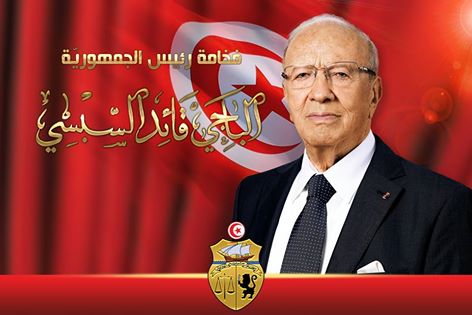
BCE

En essayant d’analyser la dernière allocution de BCE, et en partant des principes de base de rédaction de discours et de communication politiques  tout en gardant à l’esprit le contexte d’un tel événement, nous pourrons relever les points suivants:

  1. En termes decontenu: BCE a commencé son allocution avec des messages forts, marqués de clarté et de simplicité. Ceci est une bonne leçon pour les rédacteurs de discours amateurs qui tentent d’en dire trop et finissent par ne rien dire. Cependant, BCE manquait de maîtrise, il semblait lutter avec le texte préparé, et cela a bien amoché la cohérence du message véhiculé. Il parait  bien évident que Mr le Président ne s’est pas assez imprégné de son discours, ou alors il avait très peu de temps pour répéter ce qui était destiné être son discours le plus célèbre.
  2. BCE a prononcé un discours équilibré, en prenant le soin d’insister sur des points clés. Il s’est adressé aussi bien à ses amis qu’à ses ennemis. Il a excellé en remerciant les femmes dans leur rôle actif. Il a fait honneur à son statut en remerciant ceux qui ont voté pour son adversaire, en reconnaissant ceux dont les vies ont été prises trop tôt par ceux qui haïssaient la paix et en offrant un rameau d’olivier à ceux dont les idéologies pourrait être différentes de la sienne tout en assurant que leur soutien est indispensable pour l’avancement du pays. Il a assuré à ses partisans ainsi qu’à ses détracteurs, qu’il serait le président de tous les Tunisiens, et que l’unité nationale serait la carte gagnante pour mener la Tunisie à bon port.
  3. Citations percutantes et mémorables: C’est une marque de fabrique des discours de BCE qui a bien fait défaut cette fois. Dans son discours, BCE n’a pas mis l’accent sur les challenges qui nous guettent ni sur le manque de confiance qui sape le moral des Tunisiens. Il n’a fait aucune référence et n’a donné aucune assurance aux jeunes désespérés, ni à ceux qui peinent sous le seuil de la pauvreté, et qui sont devenus des pions politiques. En somme, ce speech manquait de “coup de poing” et d’appel à l’action, il manquait de l’esprit du “ask not what your country can do for you…” ou, “I have a dream”, ou encore “yes we can”. Je cherchais en vain un leader qui donnerait de la force à une époque troublée et de la sagesse à un avenir inconnu. Au lieu de cela, je n’ai entendu que des mots et des pensées non coordonnés, émanant d’un homme âgé peinant à garder sa lucidité, ce qui m’a remis à l’esprit les doutes émis pendant la campagne concernant sa fragilité physique. Néanmoins, j’étais rassuré par ses bonnes intentions et son désir du mieux de ce qu’il peut.
  4. Elaborer les contrastes et transporter les auditeurs: c’est là où BCE n’a pas assuré. Il a omis de nous peindre une image du pays que nous avons tous souhaité avoir, la Tunisie unie, pacifique harmonieuse, et autonome, où les rêves peuvent devenir réalité pour tous ses citoyens, contrairement à celle où nous avions vécu pendant les 4 dernières années , où beaucoup de ces rêves semblaient se dissiper et se faner. Le discours du président n’a pas réussi à nous inspirer ni à nous motiver pour que chacun de son côté fasse de son mieux pour transformer ce pays. Durant la campagne, BCE n’a cessé d’emprunter l’image de Bourguiba, mais à la 1ère épreuve à “statut” égal, Béji a montré qu’il lui reste du chemin pour devenir un Bourguiba.

Sur la prestation et la performance technique, je crois que BCE a échoué dans cet événement historique mémorable. Il était très mal à l’aise avec la “mise en scène”, ce serait peut-être à cause de la maladie, du froid, ou encore d’un long parcours de campagne électorale épuisante, mais le fait est que tout ce qui a caractérisé les discours de BCE au cours des 2 dernières années, manquait à sa 1ère allocution en tant que président. Nous sommes restés sur notre faim, car nous attendions le Béji éloquent, fort, spontané, charismatique, aux yeux perçants, le maître de la parole tranchante qui vous fait languir pour ses discours interminables Il est clair que BCE se sent plus dans son élément lorsqu’il est en  free-lance, c’est là qu’il peut parfumer sa prestation avec des anecdotes et des versets coraniques, quoique souvent hors contexte.

https://lotfisaibi.wordpress.com/2015/01/01/beji-caid-essebsi-speech-writing-and-communication-lessons/

Democracy Startup Business Model

Can we talk about a “democracy start up” when we are ignoring the very basis of what makes a startup successful. Has the right business model been identified encompassing post revolution Tunisia? Have we identified all the pieces comprising the ecosystem and especially the weakened components that need to be replaced?

Investir-en-Tunisie-start-up-democracy

Treating each of the failing parts of the system separately is ignoring the reality and the history of how and why we got here in the first place. Leaving it as is would be nothing short of a series of bandages meant to make us temporarily forget the pain. Blaming all of our pains on a failed revolution or too many incompetent leaders is downright irresponsible and ignoring the reality of a society in pain.

Our ecosystem is stagnant and our exports are in reverse mode and what is needed isn’t more of the same but a system by which and in which all the stakeholders can thrive.  This government benefits from insight as they are composed largely of people who succeeded in the private sector, and from mistakes made by others before them; therefore they should be able to innovate, out of necessity, some might even argue, reverse-innovate new business models for an economy stuck in neutral.

Let’s look at some key issues to be studied as we embark on this democracy startup business model:

  1. What value do these projects create in the long term? Do they improve our lives, give us other options, or simply serve as an alternative? Keep in mind that the average citizen is probably thinking of existing roads, hospitals and medical equipment, renewable energy, other food alternatives, schools and other every day essential. What impact, social or economic will they have on us as a people and will that be realized?
  2. Who do these projects serve? The answer to this question is simple: it depends. If they are meant as strictly private initiatives or socially responsible ones. The former dictates that they would have to be profit maximizers, serving as a launching pad for MN corporations looking to reverse-innovate to stay afloat, and in which case they do not serve the public, rather target the public strictly as a paying client; the latter would mean that they have a socio-economic purpose and would be considered as reach-maximizers such as more access to rural hospital and elementary schools, access to technology and available internet to all and free public transportation.
  3. What sets these initiatives apart from past initiatives and how can we ensure they will not succumb to the same fate? Have there been studies conducted, by this government or others before it, or NOGs, of why some if not most initiatives managed in part or fully by the government have failed? DO we know what role political leaderships play in the success or failure of such transformational technological projects? Have we documented all the missteps and the best practices of the past, ours and others like us?
  4. What resources will be needed for these projects to reach their desired objectives? Have we really thought about what would happen when leadership changes? Do we have now, or will later train, the necessary labor force to achieve these projects? Do we have now or de we acquire all logistics necessary to ensure the manufacturing, transport, and delivery of our goods and services? As these projects realize their potential, do we produce enough renewable energy to secure satisfying demand or have we thought of alternative ways? Have we a plan for preparing future generations of engineers, teachers, manual workers and environmentalists to care for residual effects of such an industrial revolution?
  5. What relationships have to be in place, created or improved for success? To take on such a momentous achievement, many stakeholders have to be in synch with the strategy in place. This is a national undertaking no matter how you look at it. It requires the alignment of the syndicates such as UGTT and UTICA, all the ministries and public administration institutions, as well as the private sector. At a time political partisanship and deep divide in our nation, this will prove to be a challenge for many.

I hope that the soon departing government has thought of an innovative mechanism to keep these projects on the right track through a working model that is easily executed by others once they are on the outside looking in as it will define their legacy.

This democracy startup might be what this country needs after three years of spinning idly, but it will not be without difficulties and revisions of existing laws and re-evaluation of values.


TUNISIA – WILL IT BE CIVIL WAR

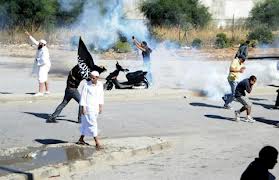
By its inaction to the latest violent maneuvers of the Salafist, the government has done two things: embolden the violent radical Islamists wing, and serve notice to the rest of the people that they either give up their demands or they will have to dealt with, violently. The longer the government keeps ignoring these events, the bolder the radical salafistes would become, causing a need for hired security or armed self defense groups.

images1 images2

If any violence is allowed to last more than 48 hours, turning into armed skirmishes, it will open the doors for many underground groups to emerge and join the fight. Citizens  would feel the need for armed protection especially once the military proves to be unequal to the task of protecting the borders, the country, and the citizens in it.

It is alleged that such groups, militarized and ideologically armed, are training and preparing for such an inevitable date with destiny.

The fight will be long and violent. When you combine well financed extremist religious and radical elements with hundreds of thousands of marginalized poor and lower middle class people, an elite middle class that sees its way of living threatened, and a government that is unable and unwilling to act righteously, you have the making of an inevitable explosive mix, usually called a civil war.

For the first time in their short history, Tunisians know what it means to be a hostage in your own homes. They are hostages of a political and social tensions and religious radicalization. Police are either not willing or unable to intervene partly due to lack of clear guidelines or ineptitude on the part of the ministry of the Interior.

It is then no surprise to hear of neighborhood groups forming to monitor and safeguard against the “Salafist police” who are “cleaning” the streets of bars serving alcoholic drinks or women in unacceptable summer clothing as declared by the founder of the religious police, a legally licensed group, Adel Ilimi “We reject any spectacle that offends Islam and Muslims, any spectacle that opposes the morals of Muslims, especially if it is in the street or in a public place,”

Such possibility reminds us of early days of post war Iraq, Lebanon in the late seventies, Niger, and Soudan. Such countries were manipulated from the inside as well from the outside, just as our government and our radical elements are. Whether the money and the strategies are coming from the East or the West is not important. What is important is that Tunisia, as we know it, will seize to exist.

At the end, I hope this scenario is just a figment of my imagination. Nonetheless, it should be the concern of political, social, intellectual, and economic opposition leaders. Secular religious leaders, parents, and educational leaders should focus the debate on tolerance and acceptance.

WHY A ZERO-SUM PROPOSITION?


Four weeks ago I stood in the middle of the Avenue Habib Bourguiba, Tunis’s Fifth Avenue. Suddenly I was I was surrounded by hundreds of people chanting and yelling. I had heard about demonstrations in various regions of the south, but so quickly in Tunis? I asked.

Without warning I was overwhelmed by a sense of exhilaration and déjà vu. It was in 1978 and 1979, back when ZABA was the National Director of Security. I was a young man attending University in Tunis. Most demonstrations were organized by the then powerful Union Generale des Etudiants Tunisiens (UGET), of which I was an active member. On one occasion I witnessed several students, and some laborers, machine-gunned by the police as they attempted to take down a statue of Bourguiba, the symbol of autocracy. I was shocked and in disbelief. It was not until about half an hour later that I realized I had a three inch deep gash on the left side of my belly. As I sought the nearest alley way and refuge away from the roaming BOB vans, I was encircled by several plain clothed policemen and taken to the ministry of Interior. It is there I met several other students, many badly beaten. I will spare you the details of my two week stay at the Interior Ministry. I try very hard to put it out of my mind, in the hope of rehabilitation and forgiveness.

Thirty years later, I find myself less than a hundred yards away from where I was first brutally beaten, and pain no longer mattered, and over eleven thousand nights of the same nightmare. I was surrounded by the same young innocent faces. The chants are the identical and the methods are indistinguishable, were it not the hundreds of portable telephones held up high. I became confused and felt a rush of blood to the head.

I was scheduled to leave for the US the next day to tend to my business. On the other hand, I wanted to see how far these demonstrations would go. I underestimated the power of these young men and women. They had the belief and desire we had thirty years before. They knew how to communicate through the use of technology. For I suppose, that ZABA and his entourage of mostly technology-challenged men like himself, also underestimated the advantages technology provided, when used properly. I go as far as claiming that the US government itself underestimated, mismanaged, and poorly strategized how to deal with social media and its proliferation within the masses. The Obama administration is still racing against the clock trying to figure out which horse to bet on, and how to best hedge its bets. If only it was not for Twitter and Facebook, they would deliberate and “monitor” the situation, as Secretary Clinton said weeks ago referring to the situation in Tunisia.

Later that evening at the neighborhood café, as some of the youth were showing off their trophies of emptied out tear-gas canisters that read “MADE IN THE USA”, I was often asked “why does Obama hate us…”, or “do they just mean democracy for the US only?” I only wish I had spent more time there explaining the position and the feeling of real American people.

On my flight back to the States the next day, I thought about those questions. I anticipated how it would be played out by all sides. I guessed, based on past history, that ZABA would justify his regime’s brutal force by claiming he was battling Islamist extremists, and I was proven right. That is a card he pulled every time he suspected his heavy-handed practices would be criticized by the world. And that is all Washington wanted and had to hear. Truth was irrelevant. This was a case of the end justifying the means, as long as the means meant stability in the region, because in this region, stability and democracy are mutually exclusive.

As someone who has recently spent considerable time in the MENA region, let me assure you that none of the men I spoke to cared about extremist views, political ideologies, Bin Laden, or Obama. In Tunisia, the street is unconcerned with geopolitical forces and Islamist views. Tunisia is a very secular country composed of an extremely well-educated young people. What they care about is jobs, dignity, freedom, and the opportunity to seek a better life. This is not an ideological uprising like China or Eastern Europe of 1989, or a religious one like Iran of 1979.

I call upon president Obama to support a genuine democracy, even at the expense of immediate American policy interests. If he chooses platitudes and the status quo, the harm to America’s standing in the region will likely take decades to repair. I have decided not to wait until a clear winner emerges. For me, there is only one party that deserves my support. For democracy and freedom is a right, not a privilege bestowed on those who only serve our national interest.

Mr. President, where is the “audacity” with which you had many of us believe you were the “change” force we were looking for? Where is the “Yes we can” you had sold us? I say to you, Sir, and on behalf of all Tunisians and Arab people, “together, we will”.


La Tunisie de demain / Tunisia of tomorrow

    (French version)                                                                                            lundi 17 janvier 2011

J’exhorte tous ceux qui lisent  cet article de se réunir contre les rebelles , les actes criminels, et  ces actuels actes de grabuge  des richesse ? N’oublions pas nos compatriotes qui ont versé de leur sang pour nous, pour qu’on  se privent de 24 ans d’Enfer. Laissons nous apprendre  de l’histoire, la nôtre et celle des autres, et collaborer  pour un  objectif commun . Chacun de nous lutte pour le bonheur, la liberté et le droit au travail ; donc je vous demande de s’arrêter un moment, réfléchir et  débattre « quelle  Tunisie nous voulons pour nous et pour nos futures générations ? »

 Nous n’avons pas le choix, il fallait  décidé notre avenir qui sera un exemple pour d’autres pays arabes et musulmans. Nous le faisons d’une manière transparente et démocratique,  tout en permettant la participation de toutes les avis, les partis et  les affiliations. Nous ne voulons pas être un autre pays sub-saharien embourbé dans la guerre civile  ou la purification ethnique. Nous sommes tous des Tunisiens et nous sommes tous des Arabes, peu importe nos religions.

Je suis un grand partisan pour la séparation entre la religion et la politique. J’ai tellement vécu et tellement lis a propos de l’histoire dans le monde, pour  savoir que les plus réussites démocraties permettent les deux libertés selon une constitution. Nous pouvons être une vraie démocratie et une vraie société musulmane.

Je fais appel au prochaine leadership du pays à adopter une stratégie passive. La tolérance des autres, mêmes ceux qui paraissent extrêmes, est une alternative  mieux que la dictature et les lois de terreur. Traitez vos citoyens avec respect et dignité, ils vous suivront. Gouvernez avec la terreur et ils révolteront contre vous.

Tunisiens dans le monde entier, partout où ils  résident, n’ont aucun autre choix, que de considérer une vraie réforme démocratique. Notre pays ne peut pas se permettre une autre alternative.

Lotfi Saibi