Tag Archives: ELECTIONS

BCE – Discours d’investiture – a-t-il marqué?

Certains diront, et ils auraient probablement raison, que le discours d’investiture de BCE était loin d’être  le meilleur discours qu’il ait pu donner.
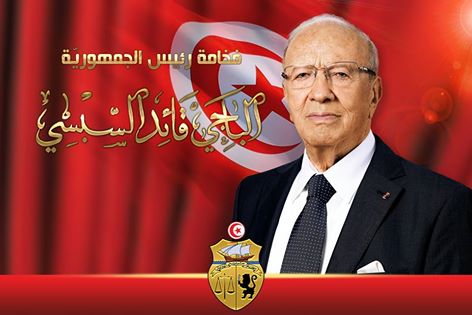
BCE

En essayant d’analyser la dernière allocution de BCE, et en partant des principes de base de rédaction de discours et de communication politiques  tout en gardant à l’esprit le contexte d’un tel événement, nous pourrons relever les points suivants:

  1. En termes decontenu: BCE a commencé son allocution avec des messages forts, marqués de clarté et de simplicité. Ceci est une bonne leçon pour les rédacteurs de discours amateurs qui tentent d’en dire trop et finissent par ne rien dire. Cependant, BCE manquait de maîtrise, il semblait lutter avec le texte préparé, et cela a bien amoché la cohérence du message véhiculé. Il parait  bien évident que Mr le Président ne s’est pas assez imprégné de son discours, ou alors il avait très peu de temps pour répéter ce qui était destiné être son discours le plus célèbre.
  2. BCE a prononcé un discours équilibré, en prenant le soin d’insister sur des points clés. Il s’est adressé aussi bien à ses amis qu’à ses ennemis. Il a excellé en remerciant les femmes dans leur rôle actif. Il a fait honneur à son statut en remerciant ceux qui ont voté pour son adversaire, en reconnaissant ceux dont les vies ont été prises trop tôt par ceux qui haïssaient la paix et en offrant un rameau d’olivier à ceux dont les idéologies pourrait être différentes de la sienne tout en assurant que leur soutien est indispensable pour l’avancement du pays. Il a assuré à ses partisans ainsi qu’à ses détracteurs, qu’il serait le président de tous les Tunisiens, et que l’unité nationale serait la carte gagnante pour mener la Tunisie à bon port.
  3. Citations percutantes et mémorables: C’est une marque de fabrique des discours de BCE qui a bien fait défaut cette fois. Dans son discours, BCE n’a pas mis l’accent sur les challenges qui nous guettent ni sur le manque de confiance qui sape le moral des Tunisiens. Il n’a fait aucune référence et n’a donné aucune assurance aux jeunes désespérés, ni à ceux qui peinent sous le seuil de la pauvreté, et qui sont devenus des pions politiques. En somme, ce speech manquait de “coup de poing” et d’appel à l’action, il manquait de l’esprit du “ask not what your country can do for you…” ou, “I have a dream”, ou encore “yes we can”. Je cherchais en vain un leader qui donnerait de la force à une époque troublée et de la sagesse à un avenir inconnu. Au lieu de cela, je n’ai entendu que des mots et des pensées non coordonnés, émanant d’un homme âgé peinant à garder sa lucidité, ce qui m’a remis à l’esprit les doutes émis pendant la campagne concernant sa fragilité physique. Néanmoins, j’étais rassuré par ses bonnes intentions et son désir du mieux de ce qu’il peut.
  4. Elaborer les contrastes et transporter les auditeurs: c’est là où BCE n’a pas assuré. Il a omis de nous peindre une image du pays que nous avons tous souhaité avoir, la Tunisie unie, pacifique harmonieuse, et autonome, où les rêves peuvent devenir réalité pour tous ses citoyens, contrairement à celle où nous avions vécu pendant les 4 dernières années , où beaucoup de ces rêves semblaient se dissiper et se faner. Le discours du président n’a pas réussi à nous inspirer ni à nous motiver pour que chacun de son côté fasse de son mieux pour transformer ce pays. Durant la campagne, BCE n’a cessé d’emprunter l’image de Bourguiba, mais à la 1ère épreuve à “statut” égal, Béji a montré qu’il lui reste du chemin pour devenir un Bourguiba.

Sur la prestation et la performance technique, je crois que BCE a échoué dans cet événement historique mémorable. Il était très mal à l’aise avec la “mise en scène”, ce serait peut-être à cause de la maladie, du froid, ou encore d’un long parcours de campagne électorale épuisante, mais le fait est que tout ce qui a caractérisé les discours de BCE au cours des 2 dernières années, manquait à sa 1ère allocution en tant que président. Nous sommes restés sur notre faim, car nous attendions le Béji éloquent, fort, spontané, charismatique, aux yeux perçants, le maître de la parole tranchante qui vous fait languir pour ses discours interminables Il est clair que BCE se sent plus dans son élément lorsqu’il est en  free-lance, c’est là qu’il peut parfumer sa prestation avec des anecdotes et des versets coraniques, quoique souvent hors contexte.

https://lotfisaibi.wordpress.com/2015/01/01/beji-caid-essebsi-speech-writing-and-communication-lessons/

si tout comme moi, vous êtes entrain de rêver

Si tout comme moi, vous avez passé trois années entre hauts et bas, si tout comme moi les turbulences économiques, les assassinats, les menaces terroristes vous ont déprimé et les jours de gloire ont ensoleillé votre vie d’espoir et de joie, alors vous seriez, tout comme moi, entrain d’attendre les élections d’Octobre et de Novembre avec impatience afin de retrouver une brise fraiche d’optimisme.
Vous seriez probablement entrain de rêver et de prier pour retrouver la perle rare, le chevalier à l’armure d’argent qui nous sauvera du haut de son cheval blanc. Vous seriez entrain de chercher la version tunisienne d’un dirigeant courageux, prêt à prendre le taureau par les cornes et apte de réunir à nouveau ce peuple martyrisé par une polarisation imposée. Vous seriez probablement à la recherche du prince charmant, celui qui fait appel aux citoyens, les écoute, et leur rappelle qu’ils sont la pierre angulaire d’une société civilisée … pas lui.
Vous seriez à la recherche d’un dirigeant intègre, ayant une puissante conscience et fierté professionnelle, un dirigeant qui serait là pour être le serviteur du peuple, et non pour être servi par le peuple. Vous seriez en quête d’un dirigeant avec des solutions aux problèmes difficiles auxquels nous sommes confrontés, un dirigeant qui pourrait restaurer notre foi en l’avenir, et être la lumière qui nous guide dans les jours à venir. Si vous êtes comme moi, vous êtes à la recherche d’un grand communicateur qui saurait parler au simple paysan et au bourgeois; quelqu’un qui est très respecté, redouté par nos ennemis et aimé par nos amis.
Bref, si vous êtes comme moi, vous êtes entrain de rêver….BETTER DAYS ARE COMING

RE-ENGINEERING THE OPPOSITION IN POST REVOLUTION

In my pursuit of the reasons behind the stalling of the Tunisian revolution and the lack of charismatic and visionary leaders, I have come across some new challenges that are shared by many in the political arena. They concern the strategies and the means necessary to building a winning political party. The following is an analysis of the current state of political party building.

The current model adopted by almost all the new parties requires a second look at the strategic level. It is top-heavy and pays very little attention to mobilizing resources. I wonder, is it because parties were not allowed sufficient time to organize and develop programs? Is it because they are still finding out what it means to communicate or raise funds?Is it because in their rush to seize power they never standardized procedures of how to build parties? Or is it simply because they are just learning on the job?

I would like to focus on two important factors.

Opposition parties are anything but successful as far as a strategic human resource mobilization is concerned. As for deployment into grassroots party building, it is more by default on account of demands by aspiring regional representatives. As a result, our parties are driven by ambition rather than vision, with uncoordinated pockets strewn throughout the country. This is one of the factors which produced the absence of choice on 10/23/2011. Choice, if it exists at all, is more about being close to the people and presenting solid propositions.

A critical test before opposition parties in Tunisia is the need to properly restructure internal party organization, second only to a party’s vision and strategy. A good party structure would mean separating political leadership from the party management. In other words, there is an urgent need to professionalize the internal workings of our parties (a question of meritocracy) if they are to meet the expectations of Tunisians. A situation where assignments are handed out based on personal loyalty is counter-productive and can only breed inequitable practices. Today, more than any time in the past, or possibly the future, professionalizing the operations of our political parties would necessitate focus in two areas. These are membership mobilization and party funding. The two are related.

As such, it is the absence of focus in these two areas that made our parties what they are – opposition in the true sense of the word- happy to jump on the opportunity to appear on TV or in half full meeting rooms, and provide nothing but rhetoric. To appeal to, and mobilize membership would entail working with specific groups of citizens such as unions, professional organizations and civil society. The strength of commitments to these partnerships would open the doors to financial contributions. Beyond offers however, membership would be encouraged to make contributions if they are guaranteed prudent management of party resources. Also, apart from good governance, good financial management is imperative for the financial survival of parties. Financial management should not be therefore only vested in the hands of political leaders. Competent personnel with requisite fundraising and bookkeeping skills must be recruited and remunerated.

The other issue is the need to focus mobilization specifically towards internal regions of the country, and specifically the close to a million unemployed and uneducated persons. Any party that is popular to these categories of our population would be guaranteed majority votes. Opposition parties need to consciously invest resources to develop youth and women mobilization programmes and projects in rural areas.

With all these issues addressed and strategies to fix or improve them in place, opposition parties should then begin the process of negotiating operational standards and best practices. If they are to ever consider alliances or future partnerships, any open issues will represent insurmountable challenges, prohibiting possible alliances, and robbing Tunisians of a viable political alternative to the current governing party, especially when the next elections are around the corner.

A POST-REVOLUTION EVOLUTION

A bi-product of a revolution dating back centuries is violence, extremism, and counter-revolution. Tunisians, Egyptians, and soon we hope our brothers and sisters from Morocco to Baghdad, must learn to deal with the aftermath of overthrowing a dictatorship, and turn that wisdom to very momentous actions. The French revolution of 1789, the Bolsheviks of 1917, the Iranian revolution of 1979 or Eastern Europe ten years later, to list just a few, could provide insights that we can apply today to navigate our way past violence, chaos, and outright barbaric acts, as has been recently reported in Tunisia.

The question that most Tunisians are struggling with today is whether or not to trust the interim government with deciding their future. This is an important question to ask since most, or all of its members at the national and regional levels such as ministers, governors and the security apparatus, were loyal to and handsomely paid by the old regime. Many will take advantage of the confusion and the public lack of understanding policy. Most will dig in even deeper by re-establishing their old “quasi-mafia” networks. This is the strategy utilized in the Ukraine post 2004 elections. The oligarchs remained in power too long after the elections, took advantage of their deeply embedded roots to expand their powers, enrich themselves, and extend the misery of those with no direct ties to the regime. I fear this scenario repeating itself as we debate what is best for Tunisia. I ask that we consider all possible choices presenting themselves to us as citizens of Tunisia. What choices will prevent post-revolution violence and corruption, yet guarantee the rights of all of those who revolted?

Tunisians need to make their interim government accountable for all of its decisions through transparency. Whether it is discussing economic incentives, unemployment compensations, dealing with imprisoned old regime cronies, or discussing a new constitution, there needs to be fairness to and fear of the constituents. A simple of way of making this possible and carrying the spirit of the revolution through the halls of the Parliament would be to televise all political debates. I have not been convinced of all the decisions taking place behind closed doors. It seems that the interim team is very selective in its information sharing. There are more questions than there are answers, especially with regard to national and domestic security, and the fate of those criminals under arrest. For the Tunisian public to trust these politicians, more needs to be brought to the table and discussed in the open. As for the selection of individuals filling certain powerful positions, the public needs to be fully versed on the criteria used for such selection, and the credentials of those chosen as well as those turned away. Most western style democracies conduct thorough background investigations on candidates, and those with questionable pasts or representing possible conflict of interest are not considered as legitimate. Any good leader would tell you that he needs to surround himself with others who complement him and share the vision, ask the tough questions, and not necessarily those who serve as puppets and simply go along for the ride.

The interim and the soon to be elected governments will have a daunting task in front of them. Tunisia needs more than political reform. It needs security, jobs and full bellies. Resolving one while forgetting about the other would encourage post revolution disorder. The responsibility of projecting normalcy is critical. It will alleviate any concern for others who consider Tunisia as a vacation and investment area. This will go a long way into putting thousands of people to work. Labor laws and the right to hold a strike may have to be revisited, and certainly revised in the case of employees of companies, public or private, providing essential services. Recent strikes have done nothing but aggravate and weaken an already very sick economy.

Tunisians need to trust their future to a representative government that drafts a solid working economic, social, and political plan.

First, I will focus on the economic strategy, because it is the primary concern of most Tunisians today, closely followed by social reform.  I will not discuss our GDP or debt service. Instead, I will offer a bottom-up approach of how to allocate resources and put everyone that is willing back to work, and get our country back on track. This will be the subject of my next post.

Lotfi Saibi

A CALL TO THE YOUNG PEOPLE OF TUNISIA

To my fellow members of the JDT, let us not become lackadaisical. Let us overcome, through dialogue, our ideological differences and unite as one. Our real job has just begun. Many of you marched and many of you have been beaten. The physical and emotional scars will be with you forever. I ask you, what was our main objective and why did so many of us get killed and injured? Was it simply to get rid of ZABA? Or was it to rid our country of the corruption, nepotism, and the muzzle we wore for so many years, no matter what name it Bore? If the answer is yes, then we should not rest for one moment. Ben Ali may have left, but all other fundamentals constituting autocracy, corruption, and lack of basic freedoms are still omnipresent. The players are different, but the game and their plan for us is the same.

One would only have to look at the initiatives being taken by the interim government to pursue the criminals and their deep-seated rooted corruption machines, to notice an obvious lack of transparency and accountability. We have had 55 years of empty promises. What we want is action. And we want to see the results, not just hear about them.

I warn that this transition period is very critical for the Tunisian people. We may have ministers whose hands are less dirty, or who chose to look the other way and not speak up under the ZABA regime. However, they have a very powerful, well-managed, well-financed, and very savvy underground police force. Some are militia, some are hired to stir trouble, and others are adept dividing us. They are the ones who tortured us, stole from us, terrorized us, and possibly killed some our loved ones.

I advise you to organize and rally behind the more intellectually mature of you. I warn you not to let your guard down and go about your business as if nothing happened. Make your voices heard in a passive way. Take to the airwaves and get others to help. Create committees and watch groups. Invite foreign experts, and NGO who have witnessed regime transitions in the past. Ask for transparency and results (proof) of all investigations into the prior regime.

We need a government OF the people, BY the people, and FOR the people.

NO DEPOTISM & NO NEPOTISM

For all Tunisians alike, young and old, rich and poor, from the north to the south, these are extraordinary times. And we face an extraordinary challenge. The leaders we will soon choose will be faced with tough decisions in the months and years ahead. Their only responsibility is the commitment they have to serve our country and all of its citizens. No role in history could be more important or more difficult. Tunisians stand for freedom, in all its facets (forms).

We, the citizens of Tunisia, need to be united in our belief, vision, and mission of guaranteeing full representation for all. From Tozeur to Tunis, Bizerte to Bin Guirdan, Kasserine to Kelibia, Sidi Bouzid to Sousse, we need to be united against any man, group, political system, or nation that is hostile to our freedom.

The jasmine revolution equals any great revolution in human history. Our young generation led us to emancipation. For that we owe them a brighter future. They seek an end to injustice, tyranny, corruption, and exploitation. More than an end of a regime, we seek a new beginning.

Adversaries of freedom, some of whom are still in power, are now seeking to reap the fruits of freedom trees, irrigated by the blood of innocent young Tunisians. Their aggression is often more concealed than open. They have personally fired no guns. And they are seldom seen. They send their agitators, snipers, and militias to terrorize our kids, burn our businesses, and rob our homes. When we band together and march, their assassins kill and terrorize our sons, brothers, fathers, and sisters.

These adversaries of freedom plan to consolidate power, to control, and finally destroy the hopes of the bravest young men and women of the 21st century.

There is no simple single policy which will move us forward. Our commitment to freedom and street slogans are only but a beginning. What we need are intellectual maturity and wisdom, not destruction of property, in-fighting, and wealth-grabbing. There is much more we can do, and must do.

First, let us decide on who among us has the intellectual know-how to navigate us through these treacherous waters and uncertain times. This can only be accomplished through real, open, and honest dialogue. For if we are seeking a democracy, we need to begin now.