Tag Archives: leader

BCE – Discours d’investiture – a-t-il marqué?

Certains diront, et ils auraient probablement raison, que le discours d’investiture de BCE était loin d’être  le meilleur discours qu’il ait pu donner.
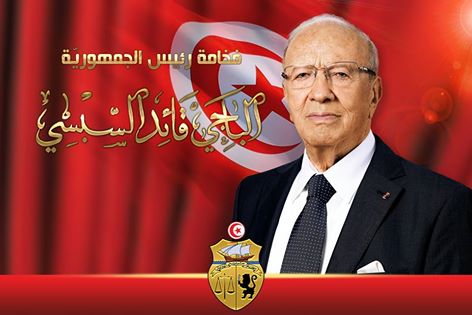
BCE

En essayant d’analyser la dernière allocution de BCE, et en partant des principes de base de rédaction de discours et de communication politiques  tout en gardant à l’esprit le contexte d’un tel événement, nous pourrons relever les points suivants:

  1. En termes decontenu: BCE a commencé son allocution avec des messages forts, marqués de clarté et de simplicité. Ceci est une bonne leçon pour les rédacteurs de discours amateurs qui tentent d’en dire trop et finissent par ne rien dire. Cependant, BCE manquait de maîtrise, il semblait lutter avec le texte préparé, et cela a bien amoché la cohérence du message véhiculé. Il parait  bien évident que Mr le Président ne s’est pas assez imprégné de son discours, ou alors il avait très peu de temps pour répéter ce qui était destiné être son discours le plus célèbre.
  2. BCE a prononcé un discours équilibré, en prenant le soin d’insister sur des points clés. Il s’est adressé aussi bien à ses amis qu’à ses ennemis. Il a excellé en remerciant les femmes dans leur rôle actif. Il a fait honneur à son statut en remerciant ceux qui ont voté pour son adversaire, en reconnaissant ceux dont les vies ont été prises trop tôt par ceux qui haïssaient la paix et en offrant un rameau d’olivier à ceux dont les idéologies pourrait être différentes de la sienne tout en assurant que leur soutien est indispensable pour l’avancement du pays. Il a assuré à ses partisans ainsi qu’à ses détracteurs, qu’il serait le président de tous les Tunisiens, et que l’unité nationale serait la carte gagnante pour mener la Tunisie à bon port.
  3. Citations percutantes et mémorables: C’est une marque de fabrique des discours de BCE qui a bien fait défaut cette fois. Dans son discours, BCE n’a pas mis l’accent sur les challenges qui nous guettent ni sur le manque de confiance qui sape le moral des Tunisiens. Il n’a fait aucune référence et n’a donné aucune assurance aux jeunes désespérés, ni à ceux qui peinent sous le seuil de la pauvreté, et qui sont devenus des pions politiques. En somme, ce speech manquait de “coup de poing” et d’appel à l’action, il manquait de l’esprit du “ask not what your country can do for you…” ou, “I have a dream”, ou encore “yes we can”. Je cherchais en vain un leader qui donnerait de la force à une époque troublée et de la sagesse à un avenir inconnu. Au lieu de cela, je n’ai entendu que des mots et des pensées non coordonnés, émanant d’un homme âgé peinant à garder sa lucidité, ce qui m’a remis à l’esprit les doutes émis pendant la campagne concernant sa fragilité physique. Néanmoins, j’étais rassuré par ses bonnes intentions et son désir du mieux de ce qu’il peut.
  4. Elaborer les contrastes et transporter les auditeurs: c’est là où BCE n’a pas assuré. Il a omis de nous peindre une image du pays que nous avons tous souhaité avoir, la Tunisie unie, pacifique harmonieuse, et autonome, où les rêves peuvent devenir réalité pour tous ses citoyens, contrairement à celle où nous avions vécu pendant les 4 dernières années , où beaucoup de ces rêves semblaient se dissiper et se faner. Le discours du président n’a pas réussi à nous inspirer ni à nous motiver pour que chacun de son côté fasse de son mieux pour transformer ce pays. Durant la campagne, BCE n’a cessé d’emprunter l’image de Bourguiba, mais à la 1ère épreuve à “statut” égal, Béji a montré qu’il lui reste du chemin pour devenir un Bourguiba.

Sur la prestation et la performance technique, je crois que BCE a échoué dans cet événement historique mémorable. Il était très mal à l’aise avec la “mise en scène”, ce serait peut-être à cause de la maladie, du froid, ou encore d’un long parcours de campagne électorale épuisante, mais le fait est que tout ce qui a caractérisé les discours de BCE au cours des 2 dernières années, manquait à sa 1ère allocution en tant que président. Nous sommes restés sur notre faim, car nous attendions le Béji éloquent, fort, spontané, charismatique, aux yeux perçants, le maître de la parole tranchante qui vous fait languir pour ses discours interminables Il est clair que BCE se sent plus dans son élément lorsqu’il est en  free-lance, c’est là qu’il peut parfumer sa prestation avec des anecdotes et des versets coraniques, quoique souvent hors contexte.

https://lotfisaibi.wordpress.com/2015/01/01/beji-caid-essebsi-speech-writing-and-communication-lessons/

si tout comme moi, vous êtes entrain de rêver

Si tout comme moi, vous avez passé trois années entre hauts et bas, si tout comme moi les turbulences économiques, les assassinats, les menaces terroristes vous ont déprimé et les jours de gloire ont ensoleillé votre vie d’espoir et de joie, alors vous seriez, tout comme moi, entrain d’attendre les élections d’Octobre et de Novembre avec impatience afin de retrouver une brise fraiche d’optimisme.
Vous seriez probablement entrain de rêver et de prier pour retrouver la perle rare, le chevalier à l’armure d’argent qui nous sauvera du haut de son cheval blanc. Vous seriez entrain de chercher la version tunisienne d’un dirigeant courageux, prêt à prendre le taureau par les cornes et apte de réunir à nouveau ce peuple martyrisé par une polarisation imposée. Vous seriez probablement à la recherche du prince charmant, celui qui fait appel aux citoyens, les écoute, et leur rappelle qu’ils sont la pierre angulaire d’une société civilisée … pas lui.
Vous seriez à la recherche d’un dirigeant intègre, ayant une puissante conscience et fierté professionnelle, un dirigeant qui serait là pour être le serviteur du peuple, et non pour être servi par le peuple. Vous seriez en quête d’un dirigeant avec des solutions aux problèmes difficiles auxquels nous sommes confrontés, un dirigeant qui pourrait restaurer notre foi en l’avenir, et être la lumière qui nous guide dans les jours à venir. Si vous êtes comme moi, vous êtes à la recherche d’un grand communicateur qui saurait parler au simple paysan et au bourgeois; quelqu’un qui est très respecté, redouté par nos ennemis et aimé par nos amis.
Bref, si vous êtes comme moi, vous êtes entrain de rêver….BETTER DAYS ARE COMING

La Tunisie de demain / Tunisia of tomorrow

    (French version)                                                                                            lundi 17 janvier 2011

J’exhorte tous ceux qui lisent  cet article de se réunir contre les rebelles , les actes criminels, et  ces actuels actes de grabuge  des richesse ? N’oublions pas nos compatriotes qui ont versé de leur sang pour nous, pour qu’on  se privent de 24 ans d’Enfer. Laissons nous apprendre  de l’histoire, la nôtre et celle des autres, et collaborer  pour un  objectif commun . Chacun de nous lutte pour le bonheur, la liberté et le droit au travail ; donc je vous demande de s’arrêter un moment, réfléchir et  débattre « quelle  Tunisie nous voulons pour nous et pour nos futures générations ? »

 Nous n’avons pas le choix, il fallait  décidé notre avenir qui sera un exemple pour d’autres pays arabes et musulmans. Nous le faisons d’une manière transparente et démocratique,  tout en permettant la participation de toutes les avis, les partis et  les affiliations. Nous ne voulons pas être un autre pays sub-saharien embourbé dans la guerre civile  ou la purification ethnique. Nous sommes tous des Tunisiens et nous sommes tous des Arabes, peu importe nos religions.

Je suis un grand partisan pour la séparation entre la religion et la politique. J’ai tellement vécu et tellement lis a propos de l’histoire dans le monde, pour  savoir que les plus réussites démocraties permettent les deux libertés selon une constitution. Nous pouvons être une vraie démocratie et une vraie société musulmane.

Je fais appel au prochaine leadership du pays à adopter une stratégie passive. La tolérance des autres, mêmes ceux qui paraissent extrêmes, est une alternative  mieux que la dictature et les lois de terreur. Traitez vos citoyens avec respect et dignité, ils vous suivront. Gouvernez avec la terreur et ils révolteront contre vous.

Tunisiens dans le monde entier, partout où ils  résident, n’ont aucun autre choix, que de considérer une vraie réforme démocratique. Notre pays ne peut pas se permettre une autre alternative.

Lotfi Saibi

What kind of intelligence does a leader need to succeed?

Back in 1995 I read a book called Emotional Intelligence (Bantam), by Daniel Goleman. I have to admit that I really did not understand a heck of a lot of what he was talking about. You see, Emotional Intelligence was a new phenomenon. I had never really heard of it as a studied discipline. I was very familiar with IQ, high levels of technical knowledge, and the various descriptions associated with great leaders. Emotional Intelligence, No way I said. This past week, while finishing a project at Harvard for one of my management classes, i had come across the same book again.I will shamefully admit that i could not put it down.  

Goleman found that while the qualities traditionally associated with leadership-such as intelligence, toughness, determination, and vision-are required for success, they are insufficient.  This made me think of how Emotional Intelligence (let’s call it EI for short) operates and its relationship with effective performance. Happily, as I read the book once more, I realized we had covered several of those answers in the prior posts of this blog.  Tangible, quantifiable criteria, such as profitability, employee turnover, assessments, were used to differentiate the star performers at senior levels within their organizations from the average ones. Interviews and tests were conducted, and capabilities were compared. The results were as suspected. Intellect was a driver of outstanding performance. The top performers also possessed cognitive skills such as big picture thinking and long term vision. Equally satisfying to me, it was also concluded that, differences in technical skills among leaders, were of negligible importance.

As such, we will now continue with our series regarding the characterisitcs of great leaders, how to identify them, and work with them. This is called managing from all levels- The Stratosphere or the water cooler.

At 30,000 feet, you can see the total picture of your business, your industry, and maybe even the economy. You can detect interesting patterns that might create opportunities for your business — imperative to stay ahead of the game.

But if your thinking is always in the stratosphere, you might miss important details. You also have to be incisive, drilling to the specifics.

Otherwise your bold goals might be completely unrealistic; you won’t be able to pinpoint the priorities for your group, and you won’t know if your grand plans are being executed.

Also, those details have to be the right ones. Of all the observations you make, all the numbers your business generates, and all the sources of information available to you, you have to make a judgment about which ones really matter.

Patterns of Thinking

In business, how you think is just as important as what you think.

The ability to think at multiple altitudes, from 30,000 feet to 50 feet, is a distinct advantage in exercising your leadership know-how. But there are at least two other ways of thinking that are equally potent.

• Reframing

Reframing is being able to change your vantage point, to look at a phenomenon or problem from a very different perspective. It’s how leaders redefine their market and create new growth trajectories – MS going from competing in OS to competing in SEO.

You can use reframing to get team members to focus on a common goal rather than on their individual interests.

I once worked for a CEO of a hospitality holding company. He wanted to dig into the details of the business, so he went to work as a street cleaner. At that level, he noticed something he didn’t like: The hard-working janitorial staff viewed customers as the enemy who stood in the way of their mission to keep the parks and parking lots clean.

So he reframed their mission from cleanliness and safety to “giving customers the greatest day of their life.” Seeing their roles in a different light gave the staff a more positive attitude toward customers and paved the way for a better customer experience.

• Connecting the dots

Linear, analytic thinking is useful and important, but sometimes you have to take mental leaps in order to make sense of incomplete or seemingly unrelated pieces of information. You have to go beyond the charts and graphs and use imagination to connect the dots.

This mental process can be unconscious. If you ponder a problem for days and suddenly wake up one morning with a clear answer, your unconscious mind has done the work of connecting the dots. It appears to be intuitive.

Think how important connecting the dots is in a business meeting. As the dialogue flows among people, you as the leader should try to make connections between the ideas as they spontaneously arise. The better you get at this, the more productive the discussion will be as you synthesize the ideas rather than choosing among them

Anyone competing in the media or software development industry — or any fast-changing industry, for that matter — has to be able to make connections even as the dots themselves change.

Superficial Leadership, a common Malaise.

How often have you known a leader who takes command of the room the minute he walks in, gets all eyes focused on him, delivers a fantastic PowerPoint presentation, and has everyone eating out of the palm of his hand?

When that happens, people think to themselves, “Now that’s a leader!”

But as time goes on, the same leader makes terrible decisions or none at all. The people who report to him lose focus, the organization loses direction, and the business begins to flounder.

The so-called leader, it turns out, has no real ability to lead a business.

Style Before Substance

The issue comes down to style versus substance. Far too often, the people who identify, develop, and appoint leaders focus on the appearance of leadership. They miss the most important aspect of it: knowing how to run a business.

In his book Blink, Malcolm Gladwell notes that CEOs are on average three inches taller than the average male, and he attributes this fact to an unconscious bias. An imposing physical stature, he surmises, sends unconscious signals about who is or isn’t a leader, and thus influences who gets picked.

It may be hard to believe that people are swayed by such superficial qualities, and height is clearly an extreme example. But there are many other traps that cause us to put the wrong people in leadership positions, with terrible consequences for the person and the business.

Are They Really Leaders?

There are certain types of leaders who aren’t necessarily business leader. Don’t assume you’ve found a leader when you find one of the following:

  • The Pedigree

When you hear leaders making frequent references to their alma mater (“When I was at Harvard…”) or the big successful company they used to work for (“When I was at Toyota…”), be skeptical. Such people may be trying to impress by virtue of where they’ve been, rather than what they’ve done as a leader.

I’m not against education or valuable work experience. (In the spirit of full disclosure, I’m a proud Harvard guy myself.) The point is that some people are taken in and choose such “leaders” either because they assume something good must have rubbed off, or because they think it’s safe.

It isn’t. You have to look at the person’s skills and record of actual accomplishment to have any sense of the person’s capability as a business leader.

  • The Spiritual Leader

Some people have a way of stirring up energy and excitement in other people. They conjure a vision of something great and appealing and have extraordinary communication skills that fire up emotion. People believe them, and want to go where they’re going.

The ability to inspire others is indeed a wonderful trait in leaders, but not every person who can arouse emotion can link her vision to the practicalities of business, and emotion alone cannot get an organization where it needs to be.

When a spiritual leader, rather than a business leader, runs the show, the initial burst of excitement can be uplifting. But it inevitably fades when results fail to materialize.

  • The Brain

One way people gauge a leader is by how smart she is. We can’t help but be impressed by the person who reacts quickly, gets to the answer fastest, can speak knowledgably on a breadth of topics, and has instant recall of names, quotations, and numbers.

Sometimes such people let you know how well-read they are. But being quick on your feet is not the same as intelligence, and intelligence is not the same as being a leader. Do we want intelligent leaders? Absolutely. Just don’t choose leaders based on raw intelligence alone.

  • The Savior

A leader is running a troubled division. Margins are shrinking, quality is deteriorating, and customers are defecting. But he is undaunted by every piece of bad news. In every review, he assures his superiors that change is right around the corner.

He has a plan, meticulously detailed in charts and graphs. He wants you to trust him, and because he seems so confident and sincere, you do.

Optimism and confidence are appealing, but make poor substitutes for the know-how of addressing problems. And we all know that problems neglected have a way of growing. The person who promises the answer but never delivers on it is not a business leader.

Focus on Substance

There are lots of personal traits we want in our leaders — things like confidence, intelligence, and communication skills. But if we want our organizations to be in good hands, we have to focus primarily on the substance of leadership — whether the person really knows what he or she is doing.

If you’re an aspiring leader, don’t assume you were born to be a leader. Leaders are largely made, not born. You have to build your leadership capabilities. The time you spend polishing your PowerPoint presentations or building your reputation may get you ahead temporarily, but in this age of transparency, the inability to deliver results will eventually catch up with you.

Disclaimer: Article source unknown, author unknown.