Tag Archives: tunisia

Case Study in Leadership: When the President Becomes the Inspector

Introduction: Governing by Surprise

What happens when a country is run like a nightly inspection tour?

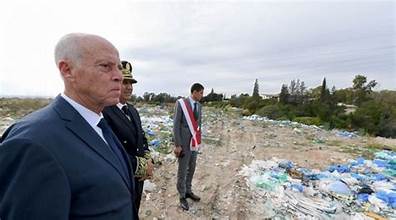
In Tunisia, President Kais Saied has carved out a unique—and deeply personal—approach to leadership. He appears without notice at ministry offices, warehouses, public markets, or illegal dumping sites, often late at night. These surprise visits are broadcast through tightly controlled media coverage, with the president fully aware of the camera, microphone, and framing.

He confronts dysfunction head-on. He scolds ministers, humiliates civil servants, and speaks directly to the people, unfiltered. On the surface, it looks like moral clarity in action—an uncorrupted president holding a broken system accountable.

But dig deeper, and you find something else:
A model of leadership that is highly reactive, deeply centralized, and dangerously unsustainable.

This isn’t just about style. It’s about how a state functions—or collapses—when leadership is built on distrust, isolation, and fear.
What Looks Like Strength May Be Institutional Weakness

At first glance, Saied’s approach appeals to frustrated citizens. It taps into real anger about corruption, inefficiency, and public sector failure. People want accountability—and here’s a president willing to confront the rot directly.

But the method reveals its own dysfunction:

  • The president has to act as inspector-in-chief.
  • Institutions are clearly not trusted to self-regulate.
  • Ministers and senior officials are surprised, exposed, and often discarded.

If the top of the system doesn’t trust anyone below, then governance is no longer about leadership—it’s about surveillance.

Fear-Based Culture: Compliance Over Competence

When the risk of public shaming is high, people adapt—but not in healthy ways. Under this model:

  • Civil servants hide problems rather than solve them.
  • Ministers say what the president wants to hear, not what he needs to know.
  • Innovation and initiative are replaced with silence and self-preservation.

This is leadership by fear. And fear is a terrible long-term management tool. It creates obedience, not performance.

The Cult of the Lone Watchman

These visits have become a ritual: the president, the camera, the microphone, the reprimand. They suggest that only one person can be trusted to uphold the state. Everyone else is suspect. Even those hand-picked by the president are later discarded or scolded in public.

What emerges is not a system—it’s a cult of oversight, centered on the idea that only the leader sees clearly.

But a one-man model of governance is brittle. It does not scale. It cannot delegate. And it leaves the country vulnerable to burnout, blind spots, and breakdown.

Warning Signs of an Unsustainable Leadership Model

SymptomConsequence
Constant surprise visitsBreakdown of trust in the institutional chain of command
Public shaming of officialsCulture of fear, avoidance, and passive resistance
Media-managed moral performancesErosion of authenticity, increase in spectacle over substance
Zero delegation of responsibilityFragile governance model overly dependent on one individual
No strategic follow-throughFocus on visible reaction, not durable reform

From Action to Optics: When Governance Becomes Theater

Perhaps the most dangerous shift is this:
These visits are no longer tools of reform. They’ve become performative acts of leadership.

They offer no clear roadmap for institutional reform, no systemic solutions, no delegation of authority. Instead, they offer visual proof that the president is vigilant, and that the system cannot be trusted without him.

This isn’t leadership by vision—it’s leadership by visibility.

What True Leadership Would Look Like Instead

A sustainable leadership model would:

  • Build systems that catch problems before the president has to
  • Empower teams to act with integrity, not fear
  • Define clear KPIs, not rely on spontaneous interventions
  • Develop a culture of trust, coaching, and learning

Real leadership is judged not by how visible the president is in solving problems,
but by how little intervention is needed once institutions function on their own.

Conclusion: A Fragile Future for a Hyper-Personalized Presidency

Kais Saied’s nightly inspection model reflects more than frustration. It reflects deep isolation at the top of Tunisia’s government.
It reveals a president who trusts no one, leads through shock and fear, and has normalized personal confrontation over institutional capacity.

This is a model that may feel strong in the moment—but over time, it hollows out the state.

Leadership that cannot delegate, cannot last.


Reflection Questions for Leaders and Citizens

  • Are we building systems that work—or just reacting when they fail?
  • Are leaders trusted enough to lead—or simply feared into obedience?
  • Is our governance model sustainable—or built entirely on one person’s presence?

TUNISIA – A COUNTRY PSYCHOLOGICALLY TRAUMATIZED

“Tunisia is not safe” and “the next terrorist attack and our country will be finished”. These were statements by President Beji Caid Essebsi while announcing a state of emergency. The president was sending a “shock therapy” message to the nation was the explanation given by Moez Sinaoui, his top communications adviser.

What psychological effects did these statements by the commander and chief have on us Tunisian citizens? I ask this question because what was said , considering the message and the deliverer,  was very dangerous not only on the psyche of a fragile nation but also on its ability to defend itself.

In those spoken words were two strong messages that cannot be disregarded: a dictating style of communications long thought gone, and fear mongering. My focus for the moment is the latter, as the first one requires much more ink and time.

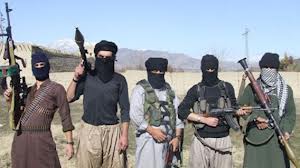
Ask any Tunisian today about his biggest concern and you will find that it is fear, and more specifically of terrorism. Tunisians up and down the socioeconomic ladder and of all political affiliations are exposed every awaken moment to news of terrorism threats, more attacks, and death related to terrorism. How should a nation like Tunisia, passive in its ways, unprepared for violence, and lethargic in implementing change, deal with what always was thought a foreign phenomenon related to oil, religion, and country grabbing.

isis

Exposure to violence, terrorism threats, insecurity have major negative psychological repercussions on a nation discovering what it means to be unsafe for the first time.

Are we aware of short and long terms effects of such media exposure? Do our journalists understand at which point their reports contribute to the mental health of a nation? Are media aware of the psychological dangers and social and class divisions as a result of uneven reports?

Researchers at Harvard and Oxford Universities, dealing with psychological syndromes post 9/11 and 7/7 terrorist attacks coined the term “mortality Salience” as the way with which people adapt to terrorist threats and overexposure to death-related thoughts or imagery. The images of death, dying and killing, which are inherent in most media coverage of terrorism, produce a mortality salience effect.

In the last two years, terrorist attacks in Tunisia have increased, and with them the number of casualties and daily exposure to violence, violence imagery, threats, and now state of emergencies. Most Tunisians have reacted like any others whose lives and model of society is being threatened, with anger, uncertainty, and helplessness, but also an increase in nationalism, patriotism and a call for unity. This is natural as Mortality salience can lead to an increase in identification with and pride in one’s country, religion, gender, race, etc.

Remarkably, mortality salience can lead to an increase in support for extremism when it is linked to group identity. Two recent examples of young Tunisians expressing sympathy and support for the Sousse or Bardo killers are the result of mortality salience and over exposure to terrorism in media. Also, individuals experience exaggerated tendencies to stereotype and reject those who are different from themselves. Research has demonstrated that mortality salience produces especially harsh reactions to those who are seen to be breaking the rules.

Thus, the mortality salience created by the coverage of terrorism can be expected to lead to an increase in sympathy and support for the government, thus, an increased hostility toward the country’s perceived enemies; while at the same time to augmented “hidden” sympathy to the terrorists themselves, providing them with easy future recruits.

While populations tend to cope fairly well with ongoing terrorist threats, media coverage often adds a destabilizing factor to the mix. Media attention certainly fosters a widespread belief that terrorist attacks are both more common and more dangerous than is actually the case, a case we have experienced after the Bardo and Sousse attacks.

Intense, and sometimes irresponsible, media coverage by itself can have some damaging impact with some adults and children appearing to suffer serious psychological problems as a result of long exposure to media coverage of terrorist attacks. Children often had trouble sleeping, suffer from nightmares, anxiety problems or depression. Adults can become stressed at work and in daily relationships, leading to decreased productivity at work, and increased hostility.

I am more than certain that communications training, responsible journalism, empathy and crisis management is a necessity not a luxury today in Tunisia and should be considered in any public or private institution’s strategy in dealing with this new chapter that is sadly not going away any time soon.

Beji Caid Essebsi – speech writing and communication lessons

Some will argue that BCE’s speech in front of the ARP to be officially named as president of Tunisia was not his most electric speech, that it was a far cry from what was expected, or that it failed to deliver on unreasonably high expectations, and they might be correct.

If we want to apply basic speech writing and political messaging principles to BCE’s speech and also keeping in mind the context of such an event, we come up with the following points:

  1. In terms of the speech contents, he started strong with a simple yet clear speech outline. This is a good lesson for amateur speech writers who try to say too much and end up saying nothing. However, BCE did not appear strong and in control. He appeared to be struggling with the prepared text, and this took away from the coherence of the message being conveyed. It is quite evident that he either did not prepare the speech, or that he had spent very little time rehearsing what might possibly be his most famous speech.
  2. He delivered a balanced speech by reminding us of key points. In this he addressed friend and foe. He excelled by thanking the women in their active role, was equal to the task in thanking those who voted for his opponent, acknowledging those whose lives were taken too soon by peace haters and by offering an olive branch to those whose ideologies might be different than his, but whose support is needed to move this country forward. He assured his fans and detractors that he would be everyone’s president and that national unity is needed to complete this journey.
  3. Impactful and memorable lines – usually a specialty of his, was missing in this speech. The speech lacked emphasis on the realities facing us, on the sagging morale and lack of confidence, and made no reference and gave no assurances to the desperately young and the very poor who have become political pawns. It lacked the knockout punch and call to action, like “ask not what your country can do for you…” or, “I have a dream”, or “yes we can”. I was looking for a leader that would provide strength in a troubled time and wisdom in unchartered future. Instead, what I heard were words, and uncoordinated thoughts of an elderly man struggling to speak lucidly. I was left with more consternation for his physical abilities, but somewhat assured by his good intentions and the desire to do the right thing.
  4. Where this speech failed in seizing an opportunity is by amplifying words by drawing contrasts between the past and the present. A good example would be MLK’s “I have a dream speech”. Interestingly, a tactic that came naturally to BCE during his campaign tour.

On the delivery and technical performance I believe that BCE failed in this momentous historical event. He was very much uncomfortable with the setting and perhaps for good reason: illness, cold weather, old age, and long exhausting schedule. Everything we have grown to expect from him in his speeches during the last 2 years was missing and that is because he is most comfortable when he free-lances by mixing a few anecdotes and Koranic verses, often out of context. He lacked his eloquence, strength, spontaneity, charisma, cadence, piercing eyes, and sharpness that made you wish for endless speeches. In this he convinced me that he is no Habib Bourguiba.

si tout comme moi, vous êtes entrain de rêver

Si tout comme moi, vous avez passé trois années entre hauts et bas, si tout comme moi les turbulences économiques, les assassinats, les menaces terroristes vous ont déprimé et les jours de gloire ont ensoleillé votre vie d’espoir et de joie, alors vous seriez, tout comme moi, entrain d’attendre les élections d’Octobre et de Novembre avec impatience afin de retrouver une brise fraiche d’optimisme.
Vous seriez probablement entrain de rêver et de prier pour retrouver la perle rare, le chevalier à l’armure d’argent qui nous sauvera du haut de son cheval blanc. Vous seriez entrain de chercher la version tunisienne d’un dirigeant courageux, prêt à prendre le taureau par les cornes et apte de réunir à nouveau ce peuple martyrisé par une polarisation imposée. Vous seriez probablement à la recherche du prince charmant, celui qui fait appel aux citoyens, les écoute, et leur rappelle qu’ils sont la pierre angulaire d’une société civilisée … pas lui.
Vous seriez à la recherche d’un dirigeant intègre, ayant une puissante conscience et fierté professionnelle, un dirigeant qui serait là pour être le serviteur du peuple, et non pour être servi par le peuple. Vous seriez en quête d’un dirigeant avec des solutions aux problèmes difficiles auxquels nous sommes confrontés, un dirigeant qui pourrait restaurer notre foi en l’avenir, et être la lumière qui nous guide dans les jours à venir. Si vous êtes comme moi, vous êtes à la recherche d’un grand communicateur qui saurait parler au simple paysan et au bourgeois; quelqu’un qui est très respecté, redouté par nos ennemis et aimé par nos amis.
Bref, si vous êtes comme moi, vous êtes entrain de rêver….BETTER DAYS ARE COMING

Open letter to President Obama

Mr. Barak Obama

President of United States of America

1600 Pennsylvania Ave NW, Washington, DC 20500, United States

June 17, 2013

Dear Sir.

The September 11, 2001 terrorist attacks were a history changing event for the USA and the world. Since, hundreds of billions of American tax payers’ money wasted, thousands of people on both sides have died and lives of millions have permanently changed.

As such, the US armed forces, under your presidency and that of your predecessor have spent nearly 10 years searching for the cold blooded killers, but eventually narrowed their search to Osama Bin Laden. The notorious Islamic terrorist was the master mind of most attacks against the US and its allies, including some Muslim countries. The whole world was behind you and supported your efforts.

It has since been alleged, that the CIA and US military intelligence actually recruited and trained OBL and some of his associates to counter the Soviet invasion of Afghanistan, a costly strategic error and a black eye to American Foreign policy, if proven to be true.

History is proving once again not to be a good teacher to foreign affairs advisors within your cabinet relating to arming and training of known killers. It seems to me, sir that you are in the process of making the same mistake again in countries of the Arab spring by providing support in all its forms to “moderate Islamists” to gain power and remain steadfast by their side even as they show the world their true intentions in the months following their elections: terror, marginalization of those opposed to them, killings, arms dealings, spread of hunger and the killing of dreams, kidnappings, widespread corruption, and political assassinations of opposition figures.

You have decided to look the other way at the atrocities committed in the name of radical Islam in that region, because for the time being you have decided these killers serve the geopolitical strategies of the US. You are carrying military strikes against terrorists in Yemen and Mali, yet you are financing and providing logistics to the same people in countries like Syria, and I suspect Egypt, Libya and Tunisia (have you forgotten a murdered US ambassor in Ben Ghazi and a torched US embassy in Tunis).

What you seem to have forgotten is that these terrorists will take your arms, your money, and your consultations to get to power using all means, even elections, only to turn against you and their own people, the day they no longer need you, they will all become OBL. You can be assured of that Mr. President

Image

We ask that you curb any and all assistance to known killers and consider the pain and suffering you are indirectly inflicting on others.

Where are the values and dignity you so often speak about? We hope they do not apply exclusively to US citizens. Most of the buried in the Arlington National Cemetery not far from the White House would not want you to support known terrorists, in the name of geopolitics and “national interest”. History will not forgive you for repeating the same mistake.

Lastly, as you often quote Thomas Jefferson, one that seems to have eluded you is the one I often remember the most “equal and exact justice to all men, of whatever state or persuasion, religious or political”

Lotfi Saibi, a concerned citizen and peace loving Tunisian

Leadership Locomotove theory

Today, Salafist leaders have called for a large march in front of the US embassy in Tunis to express their displeasure with the amateur YouTube movie depicting the prophet Mohamed saws and Islam in a negative way. Preventing them from organizing and peacefully demonstrating would be against everything we have been fighting for – freedom of expression and assembly. I assume they will gather and chant and burn flags and then run home to their Facebook accounts, wearing their Chinese made imitation Nike shoes, and drinking their American made sodas.

What if things turn really ugly? What if this march ends in tear gas, violent exchanges between demonstrators and police, flag burning, or maybe even an attempt to breach the embassy compound leading to live bullets and may be extreme violence like in Libya, Egypt, or Yemen?

Will we hear the usual rhetoric form civic and political leaders? Will we hear our president or prime minister apologize to the Americans for such barbaric acts of a “small group of religious extremists”? Will we hear condemnations blah blah blah.

What we will not hear any leader, Tunisian or Arab for that matter, is to tell the citizen of his country they are a bunch of hypocrites, that they are responsible for how the world views them, that they should be responsible for their own actions. That we cannot hold a country like the US responsible for the acts of a citizen who chose to express his views, however sick they are, when we are fighting for the same liberties in our own countries.

What Tunisian leader today is courageous enough and willing to pay such political price, at a time of electorate battle, and look his people in the eye and tell them what hurts, instead of what they want to hear? Such leadership does not yet exist, and it is exactly what our nation, and the Arab nation needs to survive, with dignity.

TUNISIA – WILL IT BE CIVIL WAR

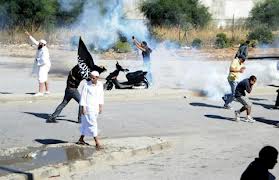
By its inaction to the latest violent maneuvers of the Salafist, the government has done two things: embolden the violent radical Islamists wing, and serve notice to the rest of the people that they either give up their demands or they will have to dealt with, violently. The longer the government keeps ignoring these events, the bolder the radical salafistes would become, causing a need for hired security or armed self defense groups.

images1 images2

If any violence is allowed to last more than 48 hours, turning into armed skirmishes, it will open the doors for many underground groups to emerge and join the fight. Citizens  would feel the need for armed protection especially once the military proves to be unequal to the task of protecting the borders, the country, and the citizens in it.

It is alleged that such groups, militarized and ideologically armed, are training and preparing for such an inevitable date with destiny.

The fight will be long and violent. When you combine well financed extremist religious and radical elements with hundreds of thousands of marginalized poor and lower middle class people, an elite middle class that sees its way of living threatened, and a government that is unable and unwilling to act righteously, you have the making of an inevitable explosive mix, usually called a civil war.

For the first time in their short history, Tunisians know what it means to be a hostage in your own homes. They are hostages of a political and social tensions and religious radicalization. Police are either not willing or unable to intervene partly due to lack of clear guidelines or ineptitude on the part of the ministry of the Interior.

It is then no surprise to hear of neighborhood groups forming to monitor and safeguard against the “Salafist police” who are “cleaning” the streets of bars serving alcoholic drinks or women in unacceptable summer clothing as declared by the founder of the religious police, a legally licensed group, Adel Ilimi “We reject any spectacle that offends Islam and Muslims, any spectacle that opposes the morals of Muslims, especially if it is in the street or in a public place,”

Such possibility reminds us of early days of post war Iraq, Lebanon in the late seventies, Niger, and Soudan. Such countries were manipulated from the inside as well from the outside, just as our government and our radical elements are. Whether the money and the strategies are coming from the East or the West is not important. What is important is that Tunisia, as we know it, will seize to exist.

At the end, I hope this scenario is just a figment of my imagination. Nonetheless, it should be the concern of political, social, intellectual, and economic opposition leaders. Secular religious leaders, parents, and educational leaders should focus the debate on tolerance and acceptance.

RE-ENGINEERING THE OPPOSITION IN POST REVOLUTION

In my pursuit of the reasons behind the stalling of the Tunisian revolution and the lack of charismatic and visionary leaders, I have come across some new challenges that are shared by many in the political arena. They concern the strategies and the means necessary to building a winning political party. The following is an analysis of the current state of political party building.

The current model adopted by almost all the new parties requires a second look at the strategic level. It is top-heavy and pays very little attention to mobilizing resources. I wonder, is it because parties were not allowed sufficient time to organize and develop programs? Is it because they are still finding out what it means to communicate or raise funds?Is it because in their rush to seize power they never standardized procedures of how to build parties? Or is it simply because they are just learning on the job?

I would like to focus on two important factors.

Opposition parties are anything but successful as far as a strategic human resource mobilization is concerned. As for deployment into grassroots party building, it is more by default on account of demands by aspiring regional representatives. As a result, our parties are driven by ambition rather than vision, with uncoordinated pockets strewn throughout the country. This is one of the factors which produced the absence of choice on 10/23/2011. Choice, if it exists at all, is more about being close to the people and presenting solid propositions.

A critical test before opposition parties in Tunisia is the need to properly restructure internal party organization, second only to a party’s vision and strategy. A good party structure would mean separating political leadership from the party management. In other words, there is an urgent need to professionalize the internal workings of our parties (a question of meritocracy) if they are to meet the expectations of Tunisians. A situation where assignments are handed out based on personal loyalty is counter-productive and can only breed inequitable practices. Today, more than any time in the past, or possibly the future, professionalizing the operations of our political parties would necessitate focus in two areas. These are membership mobilization and party funding. The two are related.

As such, it is the absence of focus in these two areas that made our parties what they are – opposition in the true sense of the word- happy to jump on the opportunity to appear on TV or in half full meeting rooms, and provide nothing but rhetoric. To appeal to, and mobilize membership would entail working with specific groups of citizens such as unions, professional organizations and civil society. The strength of commitments to these partnerships would open the doors to financial contributions. Beyond offers however, membership would be encouraged to make contributions if they are guaranteed prudent management of party resources. Also, apart from good governance, good financial management is imperative for the financial survival of parties. Financial management should not be therefore only vested in the hands of political leaders. Competent personnel with requisite fundraising and bookkeeping skills must be recruited and remunerated.

The other issue is the need to focus mobilization specifically towards internal regions of the country, and specifically the close to a million unemployed and uneducated persons. Any party that is popular to these categories of our population would be guaranteed majority votes. Opposition parties need to consciously invest resources to develop youth and women mobilization programmes and projects in rural areas.

With all these issues addressed and strategies to fix or improve them in place, opposition parties should then begin the process of negotiating operational standards and best practices. If they are to ever consider alliances or future partnerships, any open issues will represent insurmountable challenges, prohibiting possible alliances, and robbing Tunisians of a viable political alternative to the current governing party, especially when the next elections are around the corner.

Toxic LEADERSHIP in Politics as in private Industry

As Tunisians, we have lived for over twenty years under a toxic regime with a destructive organizational leadership style. Due to our lack of exposure to various leadership styles, we are, once again, very susceptible to fall prey to similar practices. Our citizenry still lacks the intellectual maturity, political wisdom and open dialogue found in more mature democracies. Our country cannot survive a democracy learning curve as most industrialized nations who have undergone radical changes and social and political instability. We do not possess the resources, infrastructure, or petro-dollars to endure a civil war or an extended period marred by waste and low productivity. As citizens of this tiny and tender nation, we have to be vigilant and sentient. We will not withstand another destructive, toxic, and despotic leader. Past leaders were interested in pursuing their own agendas. They were destructive because they led us to poverty and loss of human dignity. They led through control and coercion, rather than persuasion and commitment. Tyranny, dominance and despotic control were their qualities.

They were selfish, narcissistic, and in need of power. These noxious leaders never follow through their promises for their peoples’ well-being. Speeches and declarations are simply window-dressing and pure theatrics.

Destructive leaders concentrate power within a very small circle of loyalists, and avoid all forms of open and transparent teams. Destructive leaders are traditional in their thinking – command and control not empowerment and delegation, is a preferred modus-operandi. Effects of such destructive leadership are seen in economic, social, and political outcomes that compromise the quality of life and freedoms of citizens, something all Tunisians are all too familiar with. Control can be overt, as when secret or political police spy on citizens or opposition groups, or it can be subtle reminders to citizens of imprisonment and isolation when appeals for unity around a cause fails to materialize.

Other less obvious symptoms, which were exhibited recently during the early transition period, were:

  • Autocratic behavior: Leadership that does not allow disagreements based on insecurity
  • Personal agendas: Recruitment, selection, and promotion are based on an internal political agenda. For example surrounding one’s self with loyal subjects at the expense of others who may be more qualified for the job.
  • Political compensations: Promotions and perks not linked to job performance, but to loyalty
  • Inefficient use of resources: Budgets are allocated between departments or regions based on regionalism, favoritism, and power centers. Example: between Sidi Bouzid or Sousse
  • Too Much Talk: Plans are heavy on talk, but not enough action. All too familiar with the M.I. lately.
  • Lack of Collaboration within the government and with departments.
  • Back stabbing and bad-mouthing of outgoing members. This is a practice we have seen lately in the Tunisia.

You can leave a company whose CEO is a bully, and you can ask for transferal out of a department who director is autocratic, but what other options, other than public outrage, for when your country leaders exhibit destructive traits?

LE MONDE ARABE-POURQUOI UNE PROPOSITION A SOMME NULLE ?

Il ya quatre semaines je me tenais au milieu de l’Avenue Habib Bourguiba a Tunis. Soudain, j’ai été entouré par des centaines de personnes chantant et criant. J’avais entendu parler de manifestations dans différentes régions du sud, mais si rapidement à Tunis? Je me suis demandé.

Sans avertissement, j’ai été submergé par un sentiment d’euphorie et de déjà-vu. c’était en 1978 et 1979, époque où ZABA était le directeur national de la sécurité. J’étais un jeune homme qui allait a l’Université a Tunis. À une occasion, j’ai été témoin de plusieurs étudiants et ouvriers, mitraillés par la police alors qu’ils tentaient de démonter une statue de Bourguiba, le symbole de l’autocratie. J’étais choqué et incrédule. Il m’a fallu environ une demi-heure pour réaliser que j’avais une entaille de trois pouces de profondeur sur le côté gauche de mon ventre. Je cherchais la ruelle la plus proche pour me refugier loin des fourgonnettes itinérantes des BOB, lorsque j’ai été entouré par plusieurs policiers en civil et emmené au ministère de l’Intérieur. C’est là que j’ai rencontré plusieurs autres étudiants, dont nombreux etaient gravement battus. C’est unitile de raconteur les détails de mes deux semaines de séjour au MI. Je m’efforce de les mettre hors de mon esprit, dans l’espoir de réhabilitation et de pardon.

Trente ans plus tard, je me trouve à moins de cent mètres de l’endroit où j’ai été sauvagement battu. J’ai été entouré par les mêmes visages innocents. Les chants sont identiques et les méthodes sont indiscernables, a l’exception des centaines de téléphones portables tenus haut .

J’ai senti une tres grande confusion et un afflux de sang a la tête.

Je devais partir pour les États-Unis le lendemain pour m’occuper de mon business. En meme temps, je voulais voir jusqu’où irait ces manifestations. J’ai sous-estimé la puissance de ces jeunes hommes et femmes. Ils avaient la conviction et le désir que nous avions il y a trente ans. Ils ont su communiquer à travers l’utilisation de la technologie. Car je suppose, que ZABA et son entourage, qui etaient pour la plupart defiés par la technologie, ont sous-estimés les avantages que la technologie peut apporter, lorsqu’elle est utilisée correctement. Je vais jusqu’à prétendre que le gouvernement Américain lui-même a sous-estimé, mal géré,et mal élaboré des stratégies pour faire face aux médias sociaux et leur prolifération dans les masses. L’administration d’Obama est encore en course contre la montre essayant de comprendre quel cheval miser sur, et la meilleure façon de couvrir ses paris.

Plus tard dans la soirée au café du quartier Montplaisir, pendant que des jeunes exhibaient leurs trophées de grenades lacrymogènes vidés “Made in the USA”, on m’a souvent demandé «pourquoi est-ce-que Obama nous hait…», ou «veulent-ils nous dire que la démocratie est pour les Etats-Unis seulement? ” J’aurais voulu y passer plus de temps pour expliquer la position et le sentiment du veritable peuple américain.

Le jour suivant en retournant aux Etats Unis, j’ai pensé à ces questions. J’ai anticipé la façon dont ca serait joué par tous les côtés. J’ai deviné, sur la base des antécédents, que ZABA justifierait la brutalité de son régime en prétendant qu’il luttait contre les extrémistes islamistes, et il s’est averé que j’avais raison. C’est une carte qu’il a tiré à chaque fois qu’il soupçonnait que ses pratiques brutales seraient critiquées par ceux en dehors de la Tunisie. Et c’est tout ce que Washington voulait et devait entendre. La vérité n’était pas pertinente. Il s’agissait d’un cas où la fin justifie les moyens, aussi longtemps que les moyens destinaient la stabilité dans la région, parce que dans cette région, la stabilité et la démocratie sont incompatibles.

Ayant récemment passé un temps considérable dans la région MENA, permettez-moi de vous assurer qu’aucun des hommes a qui j’ai parlé se souciait des opinions extrémistes, des idéologies politiques, de Bin Laden, ou Obama. En Tunisie, la rue ne se soucie pas des forces géopolitiques et des idées islamistes. La Tunisie est un pays très laïque, composé d’un peuple jeune et extrêmement bien éduqué. Ce qu’ils veulent, c’est des emplois, la dignité, la liberté et l’opportunité de chercher une vie meilleure. Ce n’est pas un soulèvement idéologique comme celui de la Chine ou de l’Europe de l’Est en 1989, ou religieux comme celui de l’Iran en 1979.

Je demande au président Obama de soutenir une véritable démocratie, même au détriment des intérêts immédiats de la politique américaine. S’il choisit des platitudes et le statu quo, l’atteinte à la réputation de l’Amérique dans la région prendra probablement des décennies pour se réparer. J’ai décidé de ne pas attendre jusqu’à ce qu’un vainqueur se dégage. Pour moi, il n’ya qu’un seul parti qui mérite tout mon soutien. Par ce que la démocratie et la liberté est un droit, pas un privilège accordé à ceux qui servent notre intérêt global.

Monsieur le Président, où est «l’audace» avec laquelle vous aviez fait croire a beaucoup d’entre nous que vous étiez la force du «changement » que nous cherchions? Où est le «Yes we can” que vous nous aviez vendu? Je vous le dis, Monsieur le Président, et au nom de tous les Tunisiens et les arabes, “together, we will”.